
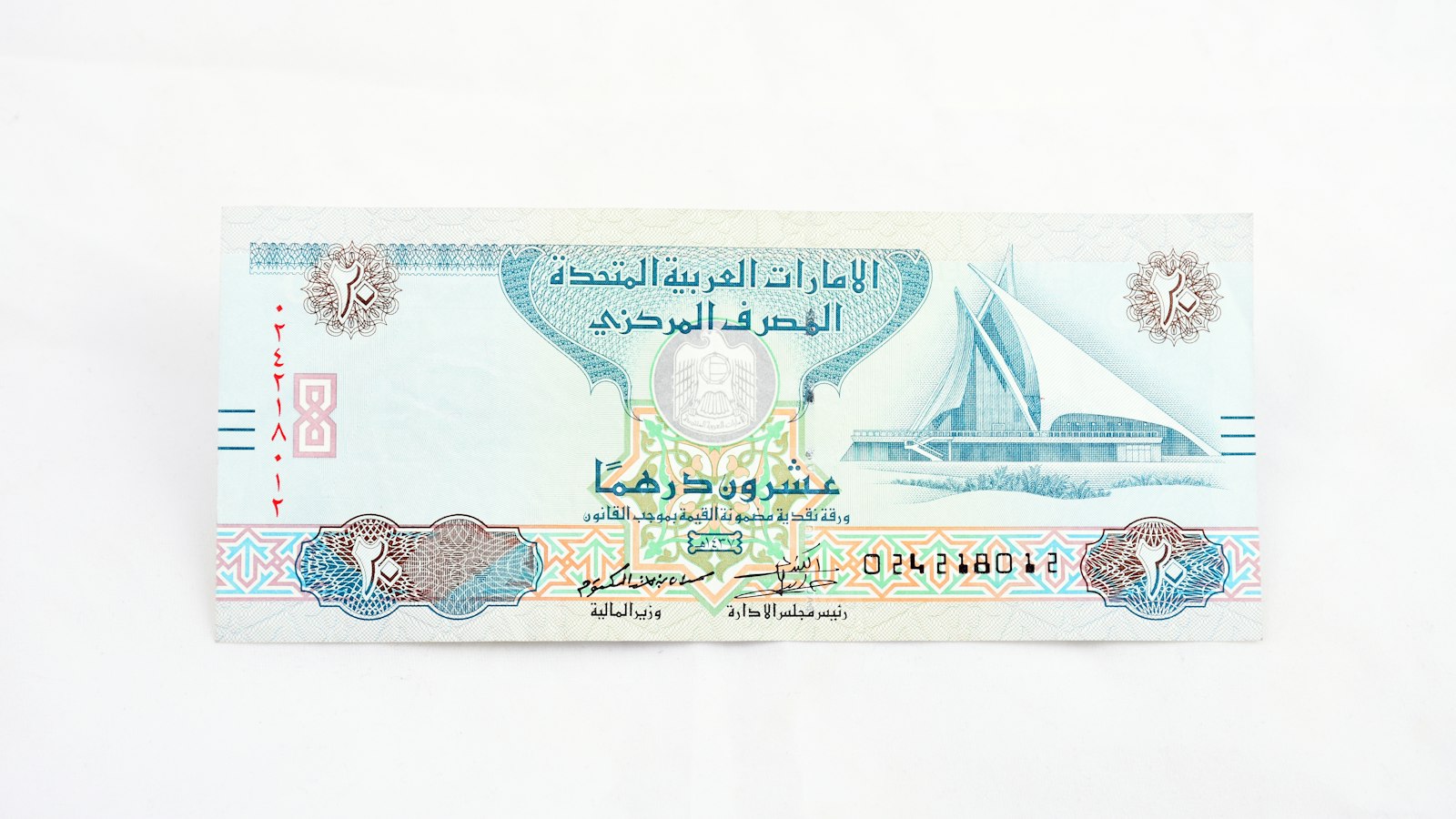
This guide explains how to open a bank account in Dubai and the rest of the UAE in 2026, as a resident or non-resident, with the documents and fees.
What changed in 2025 and 2026
The short answer: minimum balances went up, SMS codes went away, and the Central Bank’s legal framework was rewritten. If you read a UAE banking guide written before mid-2025, at least three of its key facts are now out of date. For the wider relocation process, see our complete expat guide to moving to the UAE.
| Change | Date | What it means for you |
|---|---|---|
| Minimum balance on standard current accounts raised from AED 3,000 to AED 5,000 at several banks | From 1 June 2025 | Budget for AED 5,000 rather than AED 3,000 unless you have a salary transfer or another product with the bank |
| Banks begin phasing out one-time passwords (OTPs) sent by SMS and email | From 25 July 2025 (rolled out bank by bank) | You must install and register your bank’s app to approve card payments and transfers |
| Federal Decree-Law No. 6 of 2025 replaces the previous Central Bank law | In force 16 September 2025 | Licensed institutions must provide access to appropriate financial services; complaints that a bank does not resolve can go to Sanadak, the independent banking and insurance complaints unit |
| One-year reconciliation period under the new law ends | 15 September 2026 | Banks and finance firms had to bring existing arrangements into line; the Central Bank Board can extend this |
| Central Bank Telemarketing Regulation (Circular 3/2026) | Issued 19 February 2026, with a 90-day implementation window for banks | Banks need your prior consent to telemarket to you, may call only between 9:00 am and 6:00 pm, and must respect the Do Not Call Registry |
Correction to older advice: Many guides still say the “standard” UAE minimum balance is AED 3,000. That was true for most mainstream accounts until mid-2025. Several banks now ask for AED 5,000, and the higher figure is linked in press reports to updated Central Bank personal lending rules. The banks did not all publish a single joint list, so check the Key Facts Statement of the specific account you are considering.
Who can open a UAE bank account
Anyone with a UAE residence visa and Emirates ID can open a full personal account; non-residents can open a narrower range of accounts. Banks are free to set their own eligibility rules, so the practical picture looks like this:
- Residents with a visa and Emirates ID: full access to current accounts, savings accounts, debit and credit cards, cheque books and loans (subject to the bank’s checks).
- New arrivals whose Emirates ID is still being processed: some banks will start the application with your passport and entry permit or visa, but most will not activate the full account until the Emirates ID is issued. At least one digital bank, Wio, states that you can verify your identity with your UAE work visa before you move.
- Non-residents: usually limited to savings or fixed deposit accounts, with higher minimum balances and more paperwork (see the non-resident section below).
Employees in the private sector should also note that the UAE Wage Protection System requires employers to pay salaries into an account held in the employee’s own name. In practice, most new employees open an account within their first few weeks so that payroll can run.
Documents you will need
For a standard resident account, expect to provide your passport, residence visa and Emirates ID; for a salary-transfer account, add a salary certificate. The full list varies by bank and account type.
| Document | Residents | Non-residents | Notes |
|---|---|---|---|
| Valid passport (original) | Required | Required | Must be uncancelled; non-residents may need the entry stamp or visit visa page |
| UAE residence visa | Required | Not applicable | Usually now linked electronically to the Emirates ID |
| Emirates ID | Required | Not applicable | Most banks will not activate a full account without it |
| Salary certificate from employer | For salary-transfer accounts | Not applicable | Ask your HR department; it states your salary and employer |
| Employment contract or recent payslip | Sometimes | Sometimes | Mainly for higher-tier or credit products |
| Proof of address | Sometimes | Usually | Tenancy contract, utility bill or overseas bank statement |
| Home-country bank statements (often 6 months) | Rarely | Usually | Used for source-of-funds checks |
| Reference letter from your existing bank | Rarely | Often | Confirms how long you have banked with them |
| Source of funds evidence | For large deposits | Usually | Employment, business or investment records |
Tip: Some banks have historically asked for a no-objection certificate (NOC) from your employer or sponsor. This is now uncommon for standard accounts, but if a bank asks for one, your HR team can usually issue it within a few days.
Types of account compared
For most new arrivals the real choice is between a traditional bank’s salary-transfer account and a digital-only bank account. Each suits a different stage of your move.
| Traditional current account (salary transfer) | Traditional current account (no salary transfer) | Digital bank account | Non-resident savings account | |
|---|---|---|---|---|
| Typical minimum balance | Often waived when salary is transferred | AED 3,000 to AED 5,000 at most mainstream banks | Often low or none advertised; check the tariff | Considerably higher than for residents; ask the bank |
| How you open it | Branch, app or website | Branch, app or website | App only, using Emirates ID or visa and a selfie | Usually in person at a branch |
| Cheque book | Usually available | Usually available | Varies by provider | Normally not available |
| Credit card and loans | Available, and easier with salary transfer | Available, subject to checks | Limited range | Normally not available |
| Best for | Employees on a UAE payroll | Self-employed residents and freelancers | Fast set-up, day-to-day spending, foreign currency | Holding funds before you relocate, or property buyers |
Islamic (Sharia-compliant) versions of most accounts are also widely available. Instead of interest, they pay a profit share, and fees are structured differently. Both conventional and Islamic banks are regulated by the Central Bank of the UAE. You can compare banks and other financial providers in our UAE expat directory.
Minimum balances and fees
Expect a minimum average monthly balance of AED 3,000 to AED 5,000 on a mainstream current account, with a fall-below fee of roughly AED 25 a month plus VAT if you dip under it. Premium tiers ask for far more. To see how bank charges fit into a household budget, read our guide to the cost of living in the UAE.
The AED 25 monthly fall-below fee reported across the sector when several banks raised minimums in June 2025 is charged plus 5% VAT. Premium and priority packages at the large banks require much higher balances, so check the Key Facts Statement for the exact tier. If you need advice on VAT or your wider tax position, you can find tax advisers in the UAE in our directory.
Under the June 2025 changes, banks reported several common ways to avoid the fee:
- keeping a total relationship balance of at least AED 20,000;
- earning a salary of at least AED 15,000 paid into the account; or
- holding an active loan, overdraft or credit card with the bank.
Press reports at the time also said that customers with a salary transfer of AED 5,000 to AED 14,999 were exempt if they also held a credit card, overdraft or loan with the bank. Digital accounts often set lower thresholds; check each bank’s current pricing before you rely on it.
Do not assume “zero balance” means “zero fees”. Accounts marketed as zero balance often recover their costs through card, transfer, cheque book or statement charges. Read the bank’s Key Facts Statement, which every UAE bank publishes for each account, before you open.
Step-by-step: opening your account
If you have your Emirates ID, most banks can open your account the same day or within two working days; digital banks can do it in a single session. Opening a bank account is one of the first items on our moving to the UAE checklist.
- Get your residence visa and Emirates ID first. Starting earlier usually leads to a half-finished application that the bank parks until your ID arrives.
- Ask HR for a salary certificate if you want a salary-transfer account. Some employers have a preferred bank and can speed up the process.
- Choose the account type using the comparison above. If you have just arrived and want something immediately, a digital bank can bridge the gap while you set up a traditional account.
- Apply online, in the app or at a branch. Most major banks now let you upload documents and verify your identity with your Emirates ID or UAE PASS.
- Complete the identity and source-of-funds checks. Expect questions about your employer, expected monthly deposits and the purpose of the account.
- Install the bank’s app and register your device. Since July 2025 this is no longer optional at most banks, because payment approvals have moved into the app.
- Collect or receive your debit card and, if offered, your cheque book. Some banks charge for courier delivery.
- Give your IBAN to your employer so that your salary can be paid under the Wage Protection System.
Warning: If you open a salary-transfer account and later move your salary elsewhere, the bank may reclassify the account and start charging fall-below fees, or ask you to repay any joining incentive. Check the conditions before you switch.
Opening an account as a non-resident
Non-residents can open a UAE account at several major banks, but usually only a savings or fixed deposit account, in person, with a higher opening balance. It is a useful option for property buyers or for people who want to move money ahead of a relocation, but it is not a substitute for a resident account.
What to expect:
- Account types: savings or fixed deposit only. Cheque books and overdrafts are generally not offered, and credit cards are normally unavailable.
- Paperwork: passport, proof of overseas address, around six months of bank statements, a reference letter from your current bank and evidence of source of funds.
- Process: most banks ask you to visit a branch in person; fully remote opening tends to be limited to premium relationships.
- Minimum balance: published figures vary widely and are considerably higher than for resident accounts.
Sources conflict on non-resident minimums. We found inconsistent figures, even within single sources, and most banks do not publish a non-resident tariff online. Treat any figure you read (including ours) as indicative only, and ask the bank for its current Key Facts Statement before you travel.
Once you receive your residence visa and Emirates ID, ask the bank to convert the account to a resident account. This normally lowers the minimum balance and opens up cards, cheque books and lending.
Using your account safely: OTPs, fraud and dormancy
The biggest day-to-day change since 2025 is that your bank’s app, not an SMS code, now approves most online payments. From 25 July 2025, UAE banks began phasing out one-time passwords sent by SMS and email, moving to in-app authorisation. The rollout was gradual and varied by bank, and the Central Bank told the press that it had not issued a formal notice cancelling SMS codes; bankers described a fraud-prevention circular favouring in-app authentication. The practical effect is the same either way: if your phone is lost or replaced, you will need to re-register the app before you can pay online.
Other points worth knowing:
- Scam calls and messages: the Central Bank’s 2026 telemarketing rules restrict how banks may contact you. In April 2026 the Central Bank also told banks, insurers, exchange houses and finance companies to stop using instant messaging apps such as WhatsApp to communicate with customers, request data or send one-time passwords. Treat any WhatsApp message claiming to be from your bank with suspicion, and never share an approval request you did not start.
- Dormant accounts: if you leave the UAE and forget an account, it will eventually be classed as dormant. Under the Central Bank’s Dormant Accounts Regulation, balances that remain dormant for five years after the last transaction are transferred to the Central Bank for safekeeping. You or your heirs can still reclaim them through the bank.
- Complaints: start with the bank’s own complaints process. If that fails, you can take the complaint to Sanadak, the independent body that handles banking and insurance complaints.
Building a UAE credit history
Your credit history from home does not transfer, so you start from zero with the Al Etihad Credit Bureau (AECB). The current AECB score runs from 300 to 900, and you can check your report and score through the bureau’s website or app using UAE PASS.
Practical steps for new arrivals:
- Open a credit card with your salary bank and pay it off in full each month.
- Pay telecom, utility and rent obligations on time.
- Avoid bounced cheques, particularly for rent, as a returned cheque can damage your credit record and lead to a dispute with your landlord.
Frequently asked questions
