
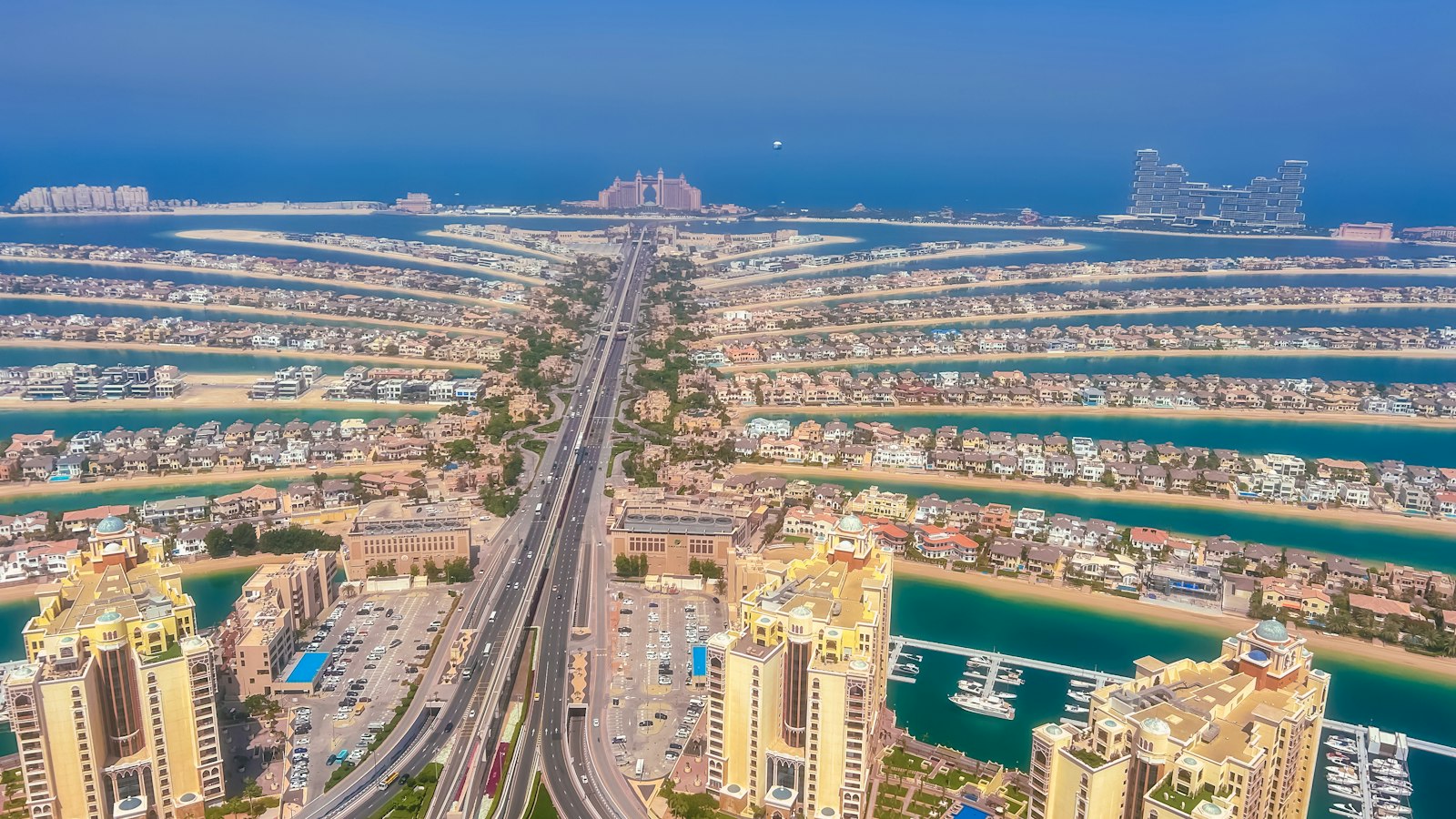
This guide explains how foreigners buy property in Dubai and the other emirates in 2026: where you can buy, the fees, mortgages and the steps.
What changed in 2025 and 2026
Three changes since mid-2025 matter for foreign buyers. Many competing guides have not yet caught up with them. If you are also relocating, see our complete expat guide to moving to the UAE.
| Change | When | What it means for you |
|---|---|---|
| Minimum property value removed for Dubai’s two-year property owner visa (sole owners) | April 2026, via the Dubai Land Department’s Cube platform | Before, a sole owner needed property worth at least AED 750,000. Now a completed, fully owned Dubai property of any value can qualify. Joint owners who are not spouses each need a share worth at least AED 400,000. |
| Golden Visa now based on property value, not the amount you have paid | Reported from a policy circular dated 20 February 2026 | Before, mortgage buyers had to have paid at least 50% of the price (or AED 1 million) before applying. Now a property valued at AED 2 million or more can qualify even with a mortgage. You still need a bank NOC and the title deed. |
| Dubai First-Time Home Buyer Programme launched | July 2025 | UAE residents aged 18 or over who do not already own freehold residential property in Dubai, and who are buying a home under AED 5 million, can register. Benefits include priority access to new launches and developer discounts. |
Correcting an outdated assumption: If you read elsewhere that you need a property worth AED 750,000 to get a Dubai residence visa through ownership, that stopped being true for sole owners in April 2026. If you read that mortgage buyers must have paid off half the price before applying for a Golden Visa, that was reported as changed in February 2026. Both rules are new, so confirm the current position with the Dubai Land Department or the General Directorate of Residency and Foreigners Affairs (GDRFA) before you buy.
There is market context too. Dubai recorded a record year of sales in 2025. After regional conflict in March 2026, transaction numbers fell by up to around 30% year on year, and April 2026 was more than 20% below April 2025. The visa change was widely read as a response to that slowdown. Prices and negotiating room may differ noticeably from 2025 headlines, so base your offer on recent transaction data, not marketing material.
Can foreigners buy property in the UAE?
Yes. Foreigners can buy property in the UAE whether or not they live there. They can hold full freehold title, but only in zones that each emirate has designated for foreign ownership. Outside those zones, foreigners are usually limited to long leases or usufruct (right-of-use) arrangements, typically for up to 99 or 100 years, or cannot buy at all.
There is no single national property law for foreigners. Each emirate runs its own land registry and sets its own rules and fees:
- Dubai: Dubai Land Department (DLD), with the Real Estate Regulatory Agency (RERA) regulating developers and brokers
- Abu Dhabi: the emirate’s municipalities and real estate authority
- Sharjah: Sharjah Real Estate Registration Department (SRERD)
- Ras Al Khaimah, Ajman and the other northern emirates: their own land departments
You do not need a UAE residence visa to buy, and in most emirates there is no minimum age beyond the usual legal capacity to sign a contract. You will need a valid passport. A residence visa and Emirates ID make banking and mortgages much easier. See our guide to the UAE residence visa.
Where foreigners can buy: emirate-by-emirate comparison
Dubai offers foreigners the most freehold choice. Abu Dhabi has opened its main investment districts. Rules in Sharjah are more restrictive, and published sources disagree on them.
| Emirate | Foreign ownership | Example areas open to foreigners | Headline transfer or registration fee |
|---|---|---|---|
| Dubai | Freehold in designated areas | Downtown Dubai, Business Bay, Dubai Marina, Palm Jumeirah, Discovery Gardens, DIFC | 4% of price (DLD transfer fee) |
| Abu Dhabi | Freehold in designated investment zones since 2019 (before that, 99-year leases). Musataha (up to 50 years) and usufruct (up to 99 years) elsewhere | Yas Island, Saadiyat Island, Al Reem Island, Al Maryah Island, Al Raha Beach, Al Reef, Masdar City, Lulu Island | Usually quoted as about 2% (see note below) |
| Sharjah | Sources conflict (see note below). Long-term usufruct or leasehold of up to 100 years is widely available in designated areas | Tilal City and certain free zones (reported) | Not confirmed in the sources we reviewed. Confirm with SRERD |
| Ras Al Khaimah, Ajman, Umm Al Quwain | Freehold in designated developments | Varies by master developer | Varies. Confirm with the emirate’s land department |
Where sources disagree: Sharjah. One large UAE property portal says foreigners cannot own freehold in Sharjah and can only take 100-year usufruct rights, with special permission. A major Dubai brokerage, writing in March 2026, says expats of any nationality can buy freehold in certain designated zones, including Tilal City. It also says resale is often limited to first-degree relatives unless SRERD approves an outside sale. Do not commit to a Sharjah purchase until a UAE-qualified lawyer has confirmed exactly what title you will receive.
Where sources disagree: Abu Dhabi fees. When Abu Dhabi opened freehold in 2019, the registration cost in investment zones was reported as falling from 4% to 2%. A 2024 fee guide describes a 2% sale registration fee and says it is normally split between buyer and seller. The same guide also lists a separate buyer-side municipality fee of about 2%, so it is unclear whether these are one charge or two. Ask the developer or your conveyancer for a written fee breakdown before you sign.
To compare neighbourhoods on lifestyle rather than ownership rules, see our guide to the best places to live in the UAE.
Buying costs: what you will actually pay
In Dubai, expect upfront purchase costs of roughly 6% to 7% of the price on top of your deposit. The 4% DLD transfer fee and the 2% agent commission make up most of it. In practice, the buyer usually pays the full 4% transfer fee, even though the law allows it to be split with the seller.
Dubai buying costs (ready or resale property)
| Cost | Amount | Paid to | Notes |
|---|---|---|---|
| DLD transfer fee | 4% of purchase price | Dubai Land Department | Usually paid in full by the buyer |
| Trustee office registration fee | AED 2,000 (under AED 500,000) or AED 4,000 (AED 500,000 and above), plus 5% VAT | Registration trustee | Fixed fee |
| Title deed issuance | About AED 580 | Dubai Land Department | Ready units |
| Knowledge and innovation fees | About AED 10 each | Dubai Land Department | Small administrative charges |
| Agent commission | Typically 2% of price, plus 5% VAT | Broker | Market practice, not a government fee. It can be negotiated |
| Developer NOC (resale) | Varies by developer, plus VAT | Developer | Confirms no service charges are outstanding |
| Mortgage registration (if borrowing) | 0.25% of loan amount, plus about AED 290 | Dubai Land Department | Only if you use a mortgage |
| Bank valuation (if borrowing) | About AED 2,500 to AED 3,500 | Bank or valuer | Charged by the lender, not DLD |
Worked example: AED 2,000,000 resale apartment in Dubai, 80% mortgage
| Item | Approximate cost (AED) |
|---|---|
| Deposit (20%) | 400,000 |
| DLD transfer fee (4%) | 80,000 |
| Agent commission (2%) plus VAT | 42,000 |
| Trustee fee plus VAT | 4,200 |
| Title deed and admin fees | about 600 |
| Mortgage registration (0.25% of AED 1,600,000) plus admin | about 4,290 |
| Bank valuation | about 2,500 to 3,500 |
| Total cash needed before bank arrangement fees | about 533,600 to 534,600 |
This example excludes the developer NOC, any bank arrangement fee and moving costs, so treat it as a starting point. For a full relocation budget, see How Much Does It Cost to Move to the UAE?.
Warning: plan to pay these costs in cash. UAE banks lend against the property value only, so upfront transaction costs (the DLD fee, commission and administrative fees) cannot normally be added to the mortgage. Your deposit and fees therefore both come from savings. Check your lender’s current policy early.
All figures in these tables come from 2026 market guides, not a published DLD fee schedule. The DLD and authorised trustee offices recommend confirming final amounts at the time of transfer.
Getting a mortgage as a foreigner
Resident expatriates can usually borrow up to 80% of the value of a first home worth AED 5 million or less, and up to 70% above AED 5 million. Off-plan property is limited to 50%. Non-residents typically get less, often around 60% on ready property. Mortgage brokers and other financial services providers are listed in our UAE directory.
| Buyer and property | Maximum loan-to-value (typical) | Minimum deposit |
|---|---|---|
| Resident expat, first home, AED 5m or less | 80% | 20% |
| Resident expat, first home, over AED 5m | 70% | 30% |
| Resident expat, second or investment property | Lower. Older Central Bank rules set 60% for non-nationals | About 40% |
| Any buyer, off-plan property | 50% | 50% |
| Non-resident, ready property | About 50% to 60% (lender practice) | 40% to 50% |
Older figures you may see: The Central Bank of the UAE’s original 2013 mortgage regulations set lower limits for non-nationals: 75% for a first home up to AED 5 million and 65% above it. In 2020 the Central Bank raised the limits for first-time buyers by five percentage points, which is why lenders now quote 80% and 70% for resident expatriates. Ask the lender for the limit that applies to your case in writing.
Other limits from the Central Bank regulations, as reported by UAE law firms:
- Maximum term: 25 years.
- Age at final repayment: generally 65 for salaried non-nationals and 70 for self-employed non-nationals.
- Debt burden ratio: total monthly debt repayments cannot exceed 50% of income.
- Income for non-residents: banks set their own minimum income requirements for non-residents, and these are usually considerably higher than for residents. This is market practice, not a regulatory figure.
Lenders value the property independently and lend on the lower of the price and the valuation. If the valuation comes in below the agreed price, you pay the difference in cash. A UAE bank account makes the process much smoother. See How to Open a Bank Account in the UAE.
The buying process step by step (resale property in Dubai)
A typical Dubai resale purchase takes four to eight weeks from signing the agreement to transfer. It runs through standard forms and a government-registered transfer.
- Set your budget and get mortgage pre-approval. Pre-approval typically shows how much you can borrow and strengthens your offer. Remember that fees must be paid in cash.
- Use a RERA-licensed broker. Check the broker’s BRN (Broker Registration Number) in the Dubai REST app before sharing documents or paying anything.
- Agree the price and sign Form F (the memorandum of understanding). This is the standard RERA sale agreement. The buyer usually gives the seller a security cheque, commonly 10% of the price, which is held until transfer.
- The seller obtains the developer NOC. This confirms that no service charges are outstanding on the unit.
- Your bank values the property and issues a final offer if you are borrowing. If the seller has a mortgage, their bank must also release it before transfer.
- Transfer at a DLD trustee office. Buyer, seller (or their representatives with valid powers of attorney) and any banks attend. You pay the DLD fee and trustee fee, the seller receives payment by manager’s cheque, and the new title deed is issued in your name.
- After transfer. Register for utilities, check service charges, and update the community management company. If you plan to let the property, register each tenancy through Ejari. Our renting guide covers the landlord side.
Do not pay deposits to individuals. Pay security cheques under Form F or into a trustee or registered escrow account, never into the personal account of an agent or a person claiming to be the seller. If someone signs for the seller under a power of attorney, check that it is genuine and current.
If you need to find a broker, see our guide on how to find an estate agent in the UAE.
Buying off-plan: how your money is protected
Off-plan purchases in Dubai have legal protections. Each project must have its own escrow account, every sale must be registered with the DLD, and there are rules for delayed or cancelled projects. Even so, banks will only lend up to 50% on off-plan property, and the risk of delay is real.
| Protection | Legal basis | What it does |
|---|---|---|
| Project escrow account | Dubai Law No. 8 of 2007 | Buyer payments go into a project-specific escrow account, not to the developer. Money is released as construction progress is verified, and the developer’s creditors cannot seize it. |
| Pre-marketing requirement | Escrow rules | Before marketing a project, the developer must meet DLD escrow and guarantee conditions. |
| Defects retention | Escrow rules | 5% of the escrow balance is held for one year after units are registered. |
| Oqood interim registration | Dubai Law No. 13 of 2008 | The sale is recorded with the DLD before a title deed exists. The developer must register each off-plan sale with the DLD. |
| Delay tolerance | RERA standard sale agreement | Delay and cancellation rights depend on the contract and RERA rules; read the handover and delay clauses before you sign. |
Before you pay, check four things in the Dubai REST app or the DLD developer directory: the developer’s registration, the project’s registration number, the escrow account details, and whether the contract uses the RERA-approved template. Then pay only into that escrow account.
Off-plan and visas do not always mix. A property registered only under Oqood (still under construction) does not qualify for Dubai’s two-year property owner visa, which needs a completed home. Off-plan property can count towards the Golden Visa under the 2026 rules, but always check with the GDRFA before relying on an unfinished property for residency.
Cancellation and refund rules for off-plan buyers who stop paying were amended in 2017, and the percentages a developer can keep depend on how far construction has progressed. These thresholds are technical, so take legal advice before you stop payments on any off-plan contract.
Property and residency: which visa your purchase can unlock
In Dubai, owning a home can qualify you for one of two residence routes. A two-year visa is now available for a completed property of any value that you own outright. A 10-year Golden Visa needs property worth at least AED 2 million.
| Route | Minimum property value | Mortgaged property? | Off-plan? | Joint ownership |
|---|---|---|---|---|
| Two-year property owner visa (Dubai) | No minimum for sole owners (from April 2026; previously AED 750,000) | Can qualify; a No Objection Certificate (NOC) from the lender is normally required. Confirm current conditions with the DLD | No. The property must be completed and habitable | Each non-spouse co-owner needs a share of at least AED 400,000. Spouses can apply as primary applicant and dependant |
| Golden Visa (property route) | AED 2 million, and several properties can be combined | Yes, based on property value since February 2026, with a bank NOC | Can qualify (check current GDRFA conditions) | Each applicant’s own share must be worth at least AED 2 million |
Dubai-issued routes generally require Dubai property. Title deeds from other emirates, and from DIFC, are reported as not accepted for the two-year Dubai visa. Other documents usually include a police clearance certificate and valid UAE health insurance.
Where sources disagree: Golden Visa duration. Dubai-focused sources, and the market guides we reviewed, describe the property Golden Visa as a renewable 10-year visa. The federal UAE government portal (u.ae) currently lists a 5-year term for real estate investors under its Golden Visa summary. Confirm the term that applies to your application with the Federal Authority for Identity, Citizenship, Customs and Port Security (ICP) or the GDRFA.
For full requirements, see our UAE Golden Visa guide. If your residency position is complicated, you can consult a specialist through our immigration lawyer guide.
Ongoing costs and tax after you buy
The UAE has no annual property tax, and individuals pay no capital gains tax or income tax on property. Owning property still has running costs, and companies that hold property may pay corporate tax.
| Item | Typical position |
|---|---|
| Annual property tax | None at federal level |
| Capital gains tax (individuals) | None |
| Income tax on rent (individuals) | None |
| Corporate tax (property held through a company) | 9% on taxable profits above AED 375,000 (regime introduced in 2023) |
| VAT on residential property | First sale of a new home by a developer is zero-rated. Resales and long-term residential leases are exempt |
| VAT on commercial property | 5% on sales and leases |
| Service charges | Paid by the owner to the community management company. Charges vary widely by building and community, so ask for the latest service charge statement |
| Housing or municipality fee | Charged through utility bills in some emirates (for tenants, 5% of annual rent in Dubai and 3% in Abu Dhabi; other emirates set their own rates). Ask how the fee is calculated for owner-occupiers before you budget |
Your home country may still tax rental income or gains from UAE property, depending on where you are tax resident. See Taxes for Expats Living in the UAE and speak to an adviser who understands both systems.
Succession planning matters. Without a registered will, a foreigner’s UAE property may not pass the way they expect. Ask a UAE-qualified lawyer how to register a will that covers your property in the emirate where it is located.
Common mistakes foreign buyers make
Most problems come from three things: underestimating the cash needed, buying in the wrong zone or under the wrong title, and paying people instead of registered accounts.
- Budgeting only for the deposit. In Dubai, fees add another 6% to 7% of the price, and banks do not normally finance them.
- Assuming every emirate works like Dubai. Title, fees and resale rights differ, particularly in Sharjah and outside designated zones.
- Buying off-plan for a quick visa. The two-year Dubai visa needs a completed property.
- Skipping broker and developer checks. Check licences in the Dubai REST app or with the land department. They take minutes to verify.
- Relying on old visa thresholds. The AED 750,000 rule and the 50% paid-up Golden Visa rule were both reported as changed in 2026.
- Ignoring service charges. High charges on some towers can significantly reduce rental yield.
Frequently asked questions
