
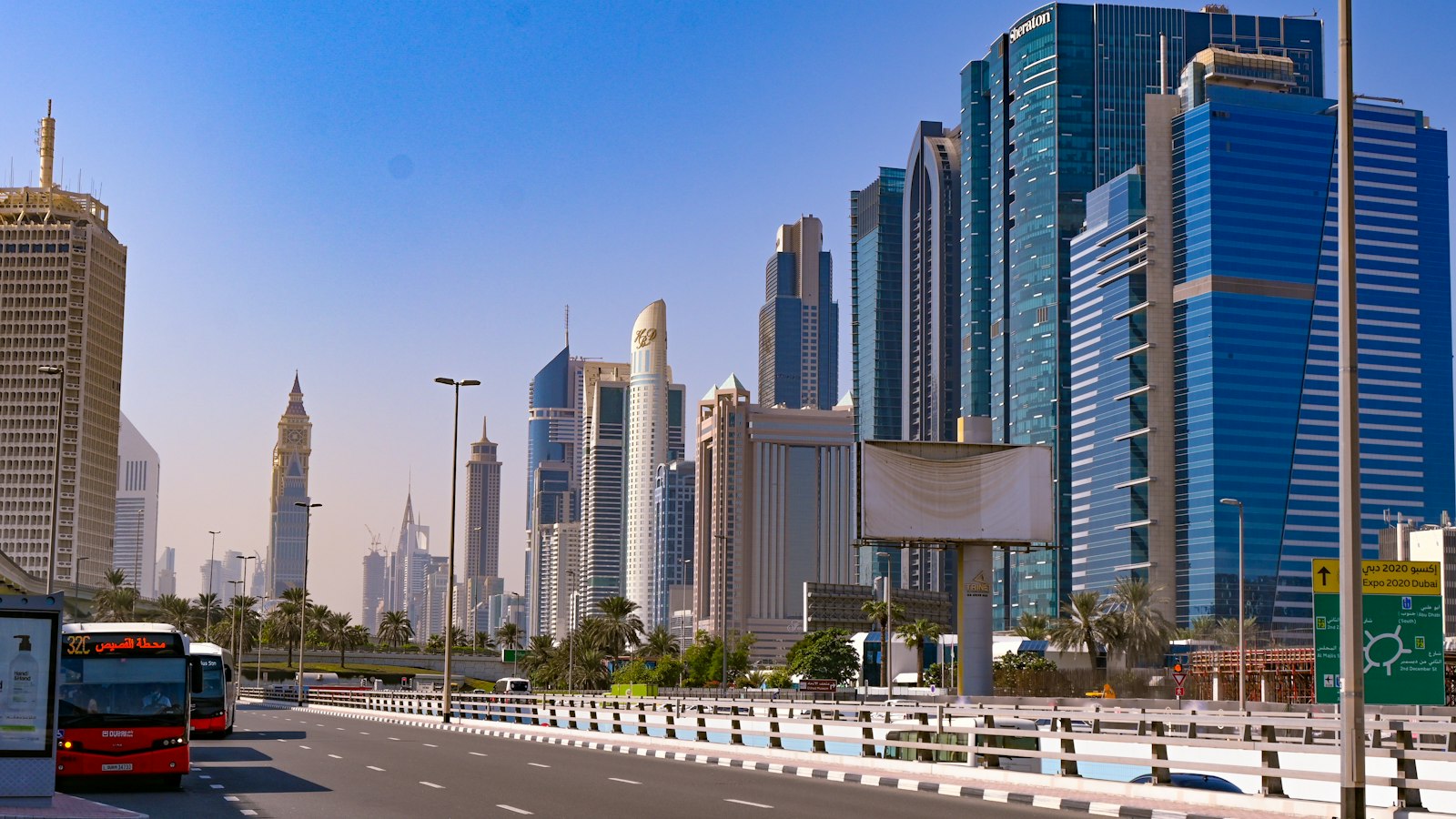
This guide covers driving in Dubai and the rest of the UAE as a visitor or resident in 2026: which licence you can use, the traffic law, fines and tolls.
What changed in 2025 and 2026
The biggest change is Federal Decree-Law No. 14 of 2024 on traffic regulation, which came into force on 29 March 2025 and replaced the previous federal traffic law. If you are reading older guides, many of the penalty figures they quote are now out of date. For the wider relocation process, see our complete expat guide to moving to the UAE.
The headline changes for foreign drivers are:
- Minimum licence age lowered to 17. The new law allows applicants aged 17 to apply for a licence. Note that the federal government portal u.ae still listed 18 as the minimum age for cars and light vehicles when we checked in October 2026, so sources currently conflict. Confirm the age that applies to you with your emirate’s licensing authority before booking lessons.
- Specific penalties for driving on an unrecognised foreign licence, rising sharply for repeat offences (see the penalties table below).
- Much heavier penalties for driving under the influence, hit-and-run and jaywalking, including possible imprisonment.
- Police powers of arrest for serious offences such as reckless driving, causing death or injury, or giving false information at a stop.
Several emirate-level changes have also landed:
- Dubai, 31 January 2025: Salik road tolls moved to variable pricing, with higher peak-hour charges and free passage overnight.
- Dubai, from 4 April 2025: peak-hour public parking tariffs were introduced.
- Abu Dhabi, 1 September 2025: the Darb toll system was revised. The evening charging window became 3pm to 7pm and the previous daily and monthly caps were removed, so frequent commuters now pay for every chargeable crossing.
Callout – outdated advice: If you have read that Abu Dhabi tolls are capped per day or per month, that stopped applying on 1 September 2025.
Can you drive in the UAE on a foreign licence?
Yes, if you are a visitor from a recognised country; no, once you become a resident. The Ministry of Interior’s Markhoos initiative separates two ideas:
- Recognition – using your national licence in the UAE for purposes other than residence (for example as a tourist).
- Exchange – swapping your national licence for a UAE licence once you take up residence.
The Ministry’s list of recognised and exchangeable licences covers, among others, the GCC states, the United Kingdom, Ireland, the United States, Canada, Australia, New Zealand and most European countries. The list changes, so check the current Ministry of Interior page for your country before you travel.
If your country is not on the list, rental companies will usually ask for an International Driving Permit issued in your home country, carried together with your national licence. Check with your rental company before you travel.
Callout – lists differ between sources: Many rental and travel websites publish country lists that are out of date. Rely on the current Ministry of Interior Markhoos page rather than third-party lists.
What happens when you become a resident
Once your residence visa is issued, your home licence no longer covers you for everyday driving. If your licence is from a Markhoos exchange country, you can usually exchange it for a UAE licence without lessons or a test. If it is not, you will normally need to go through a driving school and pass the UAE theory and road tests. The full procedure, documents and fees are covered in our guide, How to Get a Driving Licence in the UAE. Exchanging your licence is also one of the tasks on our moving to the UAE checklist.
Visitor versus resident: the rules compared
The table below summarises what you can and cannot do at each stage.
| Situation | Can you drive on your home licence? | What you need | Next step |
|---|---|---|---|
| Visitor from a Markhoos-recognised country | Yes | Valid national licence, passport with visit visa or entry stamp | Rent or borrow a car with appropriate insurance |
| Visitor from a non-recognised country | Usually only with an IDP | National licence plus International Driving Permit from home | Confirm acceptance with the rental company in advance |
| New resident from a Markhoos exchange country | No, not once residence is issued | Emirates ID, passport, home licence, eye test | Exchange for a UAE licence |
| New resident from a non-exchange country | No | Emirates ID, file with an approved driving school | Lessons, theory test and road test |
| UAE licence holder | Not applicable | UAE licence, valid registration and insurance | Renew on time; keep fines paid |
Penalties under the new traffic law
Penalties under Federal Decree-Law No. 14 of 2024 are significantly higher than under the old law, and several offences now carry possible prison sentences. The figures below are the ranges reported when the law took effect in March 2025.
| Offence | Penalty under the 2025 law |
|---|---|
| Driving on an unrecognised foreign licence (first offence) | Fine of AED 2,000 to AED 10,000 |
| Driving on an unrecognised foreign licence (repeat offence) | Imprisonment and/or fine of AED 5,000 to AED 50,000 (reports differ on the length of the prison term) |
| Driving under the influence of alcohol | Imprisonment and/or fine of AED 20,000 to AED 100,000; licence suspended for three months (first offence), six months (second), cancelled (third) |
| Driving under the influence of drugs | Imprisonment and/or fine of AED 30,000 to AED 200,000; licence suspended for six months, then one year, then cancelled |
| Fatal accident while intoxicated | At least one year’s imprisonment and a fine of at least AED 100,000 |
| Driving while your licence is suspended | Up to three months’ imprisonment and/or fine of at least AED 10,000 |
| Failing to stop, without an acceptable excuse, after an accident that injures someone | Up to two years’ imprisonment and/or fine of AED 50,000 to AED 100,000 |
| Refusing to give, or giving false, details to police | Up to three months’ imprisonment and/or fine of AED 10,000 to AED 20,000 |
| Jaywalking that causes an accident | AED 5,000 to AED 10,000 and/or imprisonment |
| Jaywalking on a road with a limit of 80 km/h or more | At least three months’ imprisonment and/or fine of at least AED 10,000 |
Callout – zero tolerance: The UAE applies a zero-tolerance approach to drink-driving. Do not drive after any alcohol at all, and remember that a conviction can affect your residence status and employment, not only your licence.
Everyday camera-enforced fines (speeding, red lights, mobile phone use, tailgating, lane discipline) are set by the federal fines schedule and attract black points on your record. Accumulate too many and your licence is suspended. Because individual amounts are revised from time to time, check the current schedule on your emirate’s police app or the federal government portal before relying on any figure you read online.
Callout – fines follow the car: If you rent a car, unpaid fines and tolls are charged back to you by the rental company, usually with an administration fee. Some offences also carry vehicle impoundment, which the rental company will pass on to you.
Road tolls: Salik in Dubai and Darb in Abu Dhabi
Dubai and Abu Dhabi both charge electronic road tolls, collected automatically by tag or number-plate recognition. There are no toll booths and you cannot pay cash at the roadside.
| Salik (Dubai) | Darb (Abu Dhabi) | |
|---|---|---|
| Latest change | Variable pricing from 31 January 2025 | Revised rules from 1 September 2025 |
| Weekday peak | AED 6 per crossing, 6am–10am and 4pm–8pm | AED 4 per crossing, 7am–9am and 3pm–7pm, Monday to Saturday |
| Weekday off-peak | AED 4, 10am–4pm and 8pm–1am | Free outside charging hours |
| Overnight | Free, 1am–6am | Free |
| Sundays | AED 4 all day (excluding public holidays, special occasions and major events) | Free on Sundays and public holidays |
| Caps | No daily cap | Daily and monthly caps removed from 1 September 2025 |
| How you pay | Salik tag linked to your vehicle; rental companies recharge you | Register your vehicle on the Darb system; rental companies recharge you |
The Darb rates above are those set by Abu Dhabi’s Integrated Transport Centre from 1 September 2025; existing exemptions for people of determination, low-income families, senior citizens and retirees continue. If you are choosing where to live, commute times are one of the factors compared in our guide to the best places to live in the UAE.
Paid parking and other everyday costs
In Dubai, public parking now costs more at peak times. From 4 April 2025, peak tariffs apply from 8am to 10am and 4pm to 8pm: AED 6 per hour in premium spaces and AED 4 per hour in other public paid spaces. Off-peak rates were left unchanged, and public parking is free from 10pm to 8am and all day on Sunday. For other ways of getting around, see the transport and utilities providers listed for the UAE.
Other running costs to budget for include fuel (prices are set monthly by the UAE Fuel Price Committee), annual vehicle registration and technical inspection, motor insurance and Salik or Darb charges. Our Cost of Living in the UAE for Expats guide places these in context with housing and other household costs.
Rental cars and car insurance
Rental is the simplest option for visitors and for new residents waiting for their UAE licence, provided your licence is valid for your status. Typical requirements are:
- a valid licence (and IDP where needed) that matches your current status,
- your passport and visa page, or Emirates ID if you are resident,
- a credit card for the security deposit, which covers later fines and tolls.
Third-party motor insurance is compulsory for every vehicle in the UAE. Rental prices normally include basic cover, but the excess can be high, so read the terms before you sign. If you buy a car, you will need insurance in place before the vehicle can be registered. Motor insurers, car rental firms and other services are listed in our UAE expat directory.
Callout – do not drive on a foreign licence as a resident: Some new arrivals keep driving rental cars on their home licence for months after their residence visa is issued. Under the 2025 law this can be treated as driving on an unrecognised licence, and your insurer may refuse an accident claim.
Road culture and practical safety tips
UAE roads are wide, well maintained and heavily monitored by cameras, but speeds are high and driving styles vary widely. A few practical points:
- Drive on the right. Overtake on the left, and avoid undertaking on the right.
- Tailgating and sudden lane changes are among the leading causes of serious accidents and are actively enforced.
- Speed limits vary by road and are signposted.
- Minor accidents with no injuries can usually be reported through your emirate’s police app rather than waiting at the scene. Serious accidents must be reported to police immediately, and leaving without giving your details now carries heavy penalties.
- Weather: fog in winter and sandstorms can reduce visibility quickly. Never drive through flooded wadis; doing so is treated as an aggravating circumstance under the new law.
- Respect and road rage: rude gestures and offensive language towards other drivers can lead to criminal charges, not only traffic fines.
Frequently asked questions
