
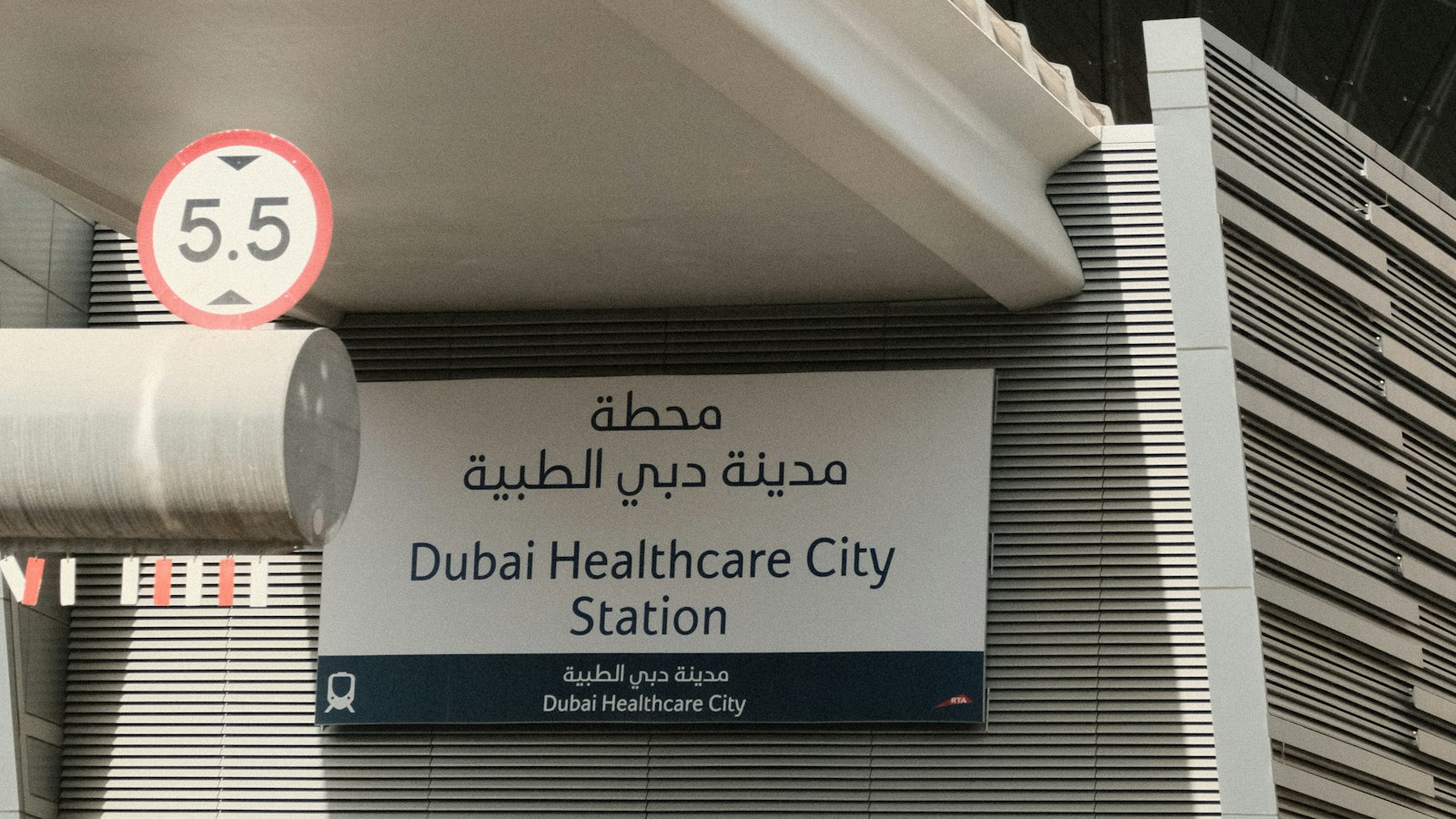
This guide explains how healthcare in Dubai and the wider UAE works for expats in 2026, from public and private care to insurance and emergencies.
What changed in 2025 and 2026
The biggest change is that compulsory employer-funded health insurance now applies across the whole country, not only in Dubai and Abu Dhabi. Until the end of 2024, a private-sector worker in Sharjah, Ajman, Ras Al Khaimah, Umm Al Quwain or Fujairah could hold a residence visa without any medical cover. That is no longer the case. For the wider relocation process, see our complete expat guide to moving to the UAE.
| Change | Effective | What it means for expats |
|---|---|---|
| Federal basic health insurance for private-sector employees and domestic workers | 1 January 2025 | Employers must buy cover before a residence permit is issued or renewed; basic package AED 320 a year, on a two-year policy |
| Revised Dubai Essential Benefits Plan (DHA Circular GC 03/2024) | 1 January 2025 | Minimum Dubai plan keeps a AED 150,000 annual limit, raises the medicines limit to AED 2,500 and caps inpatient co-insurance at AED 500 per stay and AED 1,000 a year |
| Federal Decree-Law No. 6 of 2025 | 16 September 2025 | Onshore insurance regulation consolidated under the Central Bank of the UAE (CBUAE); your health regulator (DHA, DoH or MOHAP) is unchanged |
Correction to older guides: If you have read that health insurance is “only mandatory in Dubai and Abu Dhabi”, that has been out of date since 1 January 2025. The federal requirement now covers the northern emirates as well. Some guides also still quote a AED 1,500 medicines limit for the Dubai Essential Benefits Plan; the DHA circular that took effect in January 2025 sets it at AED 2,500.
Existing workers join at renewal. The Ministry of Human Resources and Emiratisation (MOHRE) says workers whose permits are dated before 1 January 2025 do not need the new cover until their residence permit is renewed, at which point the employer must buy it. Some press reports gave the cut-off as 1 January 2024; MOHRE’s own page is the authority. Confirm your position with MOHRE (800 382 467) or your employer.
How the UAE healthcare system is organised
The UAE does not have one national health service; each emirate group has its own regulator and its own insurance rules. This is why advice that is correct for Dubai can be wrong for Abu Dhabi or Sharjah. You can find clinics, insurers and other providers by emirate in our UAE expat directory.
| Area | Health regulator | Main public provider | Insurance law |
|---|---|---|---|
| Dubai | Dubai Health Authority (DHA), with the Dubai Health Insurance Corporation supervising insurance | Dubai Health | Dubai Law No. 11 of 2013 |
| Abu Dhabi (including Al Ain and Al Dhafra) | Department of Health – Abu Dhabi (DoH) | SEHA | Abu Dhabi Law No. 23 of 2005 |
| Sharjah, Ajman, Ras Al Khaimah, Umm Al Quwain, Fujairah | Ministry of Health and Prevention (MOHAP); Sharjah also has its own health authority | Emirates Health Services (EHS) | Federal scheme from 1 January 2025, administered through MOHRE |
In practice, this means three things for a new arrival:
- Your licence to practise, your clinic’s licence and your insurance policy all sit under the regulator of the emirate where you are insured. A Dubai-compliant policy is built around Dubai’s rules.
- Government health schemes are mostly for UAE nationals. Abu Dhabi’s Thiqa programme gives Emiratis full cover through Daman, and Dubai’s Enaya system covers Dubai Government employees and Dubai citizens. Expats working in the private sector are not eligible for these.
- Expats pay for care at public hospitals too. Public facilities can be cheaper than private ones, but they are not free to expats beyond emergency stabilisation.
Health insurance rules by emirate
Every expat resident now needs health insurance, but who pays for whom differs by emirate. The employee is always the employer’s responsibility; the rules on spouses and children are where people get caught out.
| Dubai | Abu Dhabi | Northern emirates | |
|---|---|---|---|
| Employee | Employer must insure | Employer must insure | Employer must insure (since 1 January 2025) |
| Spouse and children | Visa sponsor (usually the employee) must insure | Government portal states employers and sponsors must cover the employee plus 1 spouse and 3 children under 18 | Not set by the federal scheme; family members can join at the same benefits and price |
| Domestic workers | Sponsor must insure | Sponsor must insure | Sponsor must insure (since 1 January 2025) |
| Self-sponsored residents (investors, freelancers, Golden Visa holders) | Must buy their own policy | Must buy their own policy | Must buy their own policy |
| Minimum standard | Essential Benefits Plan (EBP) for salaries of AED 4,000 a month or less; DHA-compliant policy above that | DoH Basic or Enhanced plan from a DoH-approved insurer | Federal basic package or an approved equivalent |
| Can the premium be taken from salary? | No | No | No |
| Enforcement | Visa not issued or renewed; fines | Visa not issued or renewed; fines | Visa not issued or renewed |
Watch the fines figures. Dubai and Abu Dhabi can fine sponsors for each month a person is left uninsured, but the amounts quoted online differ and we could not confirm a current figure on an official page. If you are an employer or sponsor, confirm the current amount with the DHA or DoH rather than relying on a figure you read online.
If you are self-sponsored, you are your own sponsor: you cannot renew your residence visa without a valid policy for yourself and anyone you sponsor. For a breakdown of plan types and how to compare them, see our guide to Health Insurance for Expats in the UAE. For complex sponsorship cases, you can consult visa lawyers listed in the UAE.
What the minimum plans actually cover
The minimum plans are designed as a safety net, not as the cover most professionals expect, and the federal package in particular excludes pregnancy, childbirth and dental care. If your employer offers only the legal minimum, read the benefits table before you move your family.
| Benefit | Dubai Essential Benefits Plan (from 1 January 2025) | Federal basic package, northern emirates (from 1 January 2025) |
|---|---|---|
| Who it is for | Dubai employees earning AED 4,000 a month or less (higher earners need at least a DHA-compliant plan) | Private-sector employees and domestic workers aged 1 to 64 (older people only with insurer approval and a medical assessment) |
| Annual premium | Set by the insurer; not fixed by the DHA | AED 320 a year, two-year policy |
| Annual limit | AED 150,000 | Not stated by MOHRE |
| GP and specialist visits | 20% co-insurance; no charge for a follow-up within 7 days | 25% co-payment, capped at AED 100 a visit; no charge for a follow-up within 7 days |
| Inpatient care | 20%, capped at AED 500 per stay and AED 1,000 a year, then 100% covered | 20%, capped at AED 500 per visit and AED 1,000 a year, then 100% covered |
| Medicines | 30% per prescription, AED 2,500 annual limit | 30% co-payment, AED 1,500 annual limit |
| Pre-existing and chronic conditions | Covered; may be excluded for the first 6 months only if this is your first UAE scheme | Covered with no waiting period |
| Maternity | Up to AED 10,000 per delivery, 10% co-insurance; 8 antenatal visits and 3 scans | Not covered |
| Dental | Limited, 30% co-insurance per visit | Not covered |
| Newborns | Covered for 30 days, then need their own policy | Family members can be added at the same price and benefits |
| Where it works | Dubai for routine care; emergencies anywhere in the UAE | Approved network: 7 hospitals, 47 clinics and medical centres, 44 pharmacies (per MOHRE) |
The network matters as much as the benefits. The federal package works through a defined network of providers. If your nearest hospital is not in it, routine treatment there is not covered. Ask for the network list before you choose where to live.
Most salaried professionals in Dubai and Abu Dhabi are given cover well above these minimums as part of their package, often with wider networks, higher limits and some international cover. Do not assume this, however: check the plan name, annual limit, network and maternity terms in writing before you sign your employment contract. If you are relocating with a family, relocation specialists listed for the UAE can help you organise visas, insurance and registrations.
Public versus private healthcare
Most expats use private clinics and hospitals day to day, because that is where their insurance networks point them and where waiting times are shortest. Public hospitals are well equipped and are the backbone of trauma and emergency care, but expats are charged for non-emergency treatment there.
| Public (Dubai Health, SEHA, EHS) | Private hospitals and clinics | |
|---|---|---|
| Who pays | Expats pay fees or use insurance; nationals largely covered by government schemes | Insurance or self-pay |
| Typical use by expats | Emergencies, trauma, some specialist care, visa medicals | GP visits, specialists, maternity, elective surgery |
| Access | Often appointment-based, can be slower for non-urgent care | Fast appointments; walk-in clinics common in cities |
| Language | Arabic and English widely used | English is the working language in most private facilities |
| Check before you go | Whether your insurer has direct billing with that facility | Whether the facility is in your network and whether you need a referral |
Insurance in the UAE usually works through direct billing: you show your insurance card or Emirates ID, pay any co-payment at the desk, and the provider claims the rest from the insurer. Out of network, you may have to pay in full and claim back, if your plan allows it at all.
If you want a doctor who consults in English, our guide How to Find an English-Speaking Doctor in the UAE covers that search, and the Healthcare directory lists clinics and practitioners by emirate.
Emergencies and ambulances
In an emergency, call 998 for an ambulance; treatment to stabilise you is free at any hospital, whether or not you are insured. Once you are stable, further treatment must be paid for by your insurer or by you.
| Service | Number |
|---|---|
| Ambulance | 998 |
| Police | 999 |
| Fire (Civil Defence) | 997 |
| Coastguard | 996 |
| Search and rescue | 995 |
Dubai’s insurance regulations go further: a provider must treat a patient in an emergency until their condition stabilises, even if the hospital is outside the insurer’s network, and then claim from the insurer. Whether something counts as an emergency is judged by the symptoms at the time, not only by the final diagnosis, so you should not be penalised for seeking urgent care for chest pain that turns out to be minor.
Do not rely on emergency cover alone. Free stabilisation is not the same as free treatment. Surgery, a hospital stay or follow-up care after an emergency will be billed, and without insurance those bills fall on you. Healthcare costs are set alongside other household spending in our guide to the cost of living in the UAE.
The medical fitness test for your visa
Adults applying for or renewing a residence visa must pass a medical fitness test, which screens mainly for communicable diseases such as HIV and tuberculosis. Children under 18 are not required to take it.
| Emirate | Where to take the test | Cost |
|---|---|---|
| Abu Dhabi | SEHA Disease Prevention and Screening Centres | Varies by service tier; confirm when booking |
| Dubai | Dubai Health medical fitness centres (chosen during the visa application) | Varies by service tier; confirm when booking |
| Sharjah, Ajman, Ras Al Khaimah, Umm Al Quwain, Fujairah | Emirates Health Services medical examination centres | Varies by service tier; extra charges may apply for vaccination or other tests where needed |
Some occupations, including domestic work, food handling, nurseries, salons and health clubs, face additional tests such as hepatitis B and syphilis. Under a 2016 Cabinet resolution, a resident found to have tuberculosis at renewal can receive a conditional fitness certificate and a one-year visa while undergoing treatment in the UAE. Fees and test lists change, so confirm both when you book. Our UAE Residence Visa guide explains where the medical sits in the visa process. Booking the medical is also one of the steps on our moving to the UAE checklist.
Maternity, dental and other gaps to check
The most common unpleasant surprise for expat families is discovering that their policy does not cover pregnancy or dental care, or covers it only up to a low limit. Before you move, check these points on any policy you or your employer holds:
- Maternity: the Dubai EBP covers up to AED 10,000 per delivery; the federal basic package in the northern emirates covers none. Many policies also apply a waiting period before maternity benefits start, so plan ahead if you hope to start a family.
- Dental and optical: usually excluded or limited on basic plans.
- Newborns: under the Dubai EBP a baby is covered for 30 days only, after which they need their own policy.
- Coverage outside your emirate: the Dubai EBP covers routine care only within Dubai, with emergencies covered across the UAE.
- Treatment abroad: basic plans do not cover you when you travel. If you visit home regularly or want the option of treatment elsewhere, you will need an enhanced or international plan.
- Age: the federal package covers ages 1 to 64; older family members can be covered only with the insurer’s approval after a separate medical assessment.
Getting started: your first weeks
Get your insurance card and your Emirates ID first; almost every clinic visit starts with one or both. A practical order of tasks for a new arrival:
- Confirm your cover in writing. Ask HR for the plan name, insurer, network and benefits table, and whether your family is included.
- Insure your dependants before their visas are processed. In Dubai and the northern emirates this is usually your responsibility as their sponsor.
- Book the medical fitness test as part of your residence visa process.
- Find a GP or family clinic in your network near home, and register children with a paediatrician.
- Save 998 and your insurer’s helpline in your phone, and note the nearest hospital with an emergency department.
- Bring a supply and a written list of regular medicines, and check whether any are controlled in the UAE before you travel.
Frequently asked questions
