
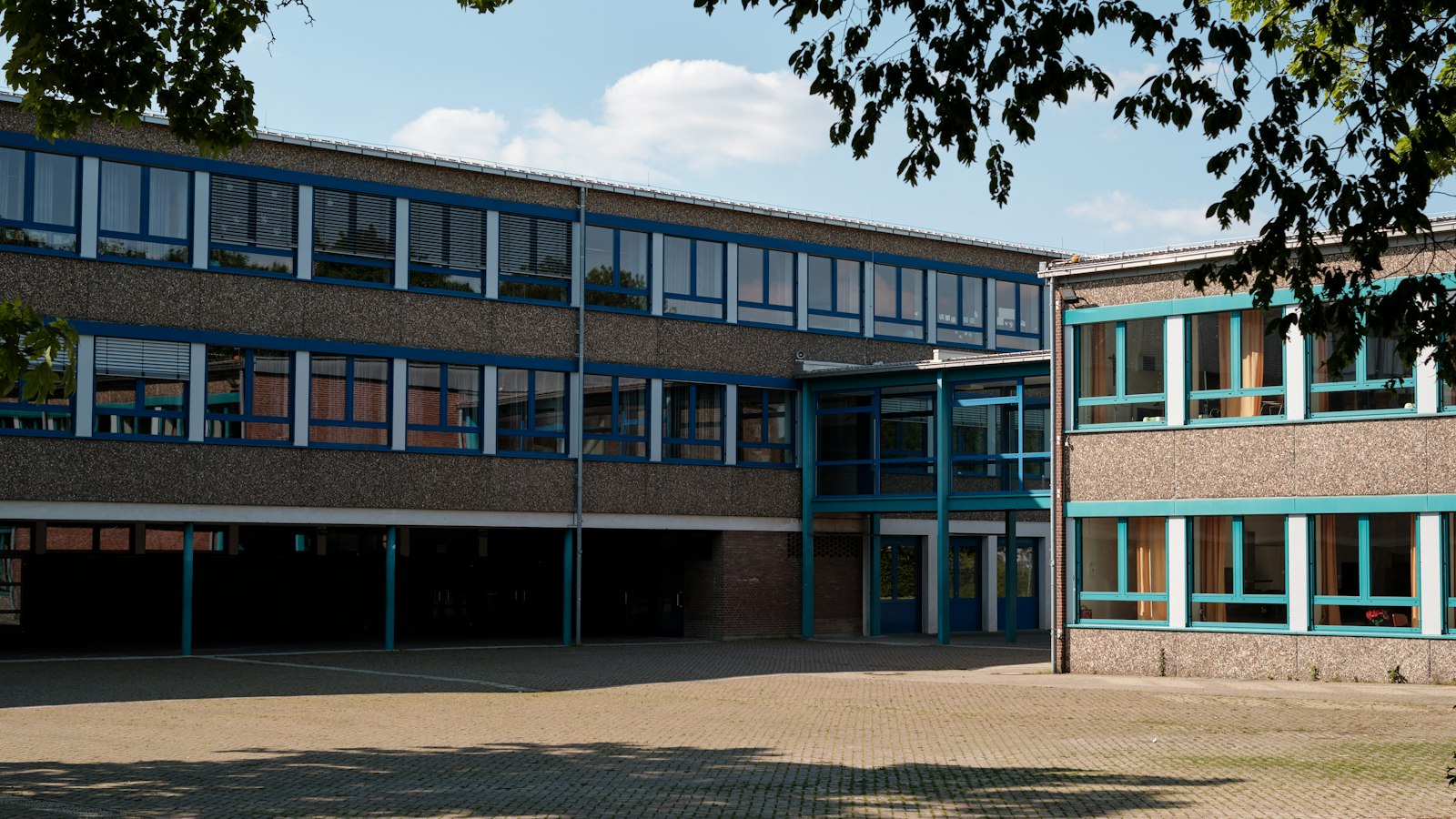
This guide compares international schools in Germany for 2026–27, with fees, curricula, tax relief and attendance rules.
What changed in 2026 for school-age children in Germany
The biggest change is that, from 1 August 2026, every child starting Year 1 (Klassenstufe 1) has a legal right to all-day care, and this right expands one year group at a time until it covers all primary pupils (grades 1 to 4) from the 2029/30 school year. This matters to expat families because the strongest practical argument for paying international school fees has often been the full school day. Many German primary schools traditionally finished around lunchtime, leaving working parents to arrange afternoon care themselves. For the rest of the move, see our complete guide to moving to Germany.
Under the new entitlement, set out by the Federal Ministry for Education, Family, Senior Citizens, Women and Youth (BMBFSFJ):
| Feature of the 2026 all-day entitlement | What the rule says |
|---|---|
| Start date | 1 August 2026 (school year 2026/27) |
| Who is covered first | Children entering grade 1 |
| Full roll-out | All children in grades 1 to 4 from 2029/30 |
| Hours covered | Up to 8 hours on each of the 5 weekdays, with lesson time counted |
| School holidays | Covered in principle; states may close provision for a maximum of 4 weeks a year (need not be consecutive) |
| Who organises it | The federal states (Länder), with youth welfare services ensuring alternatives during closures |
Callout: what the entitlement does not tell you. The official guidance we reviewed does not say whether the entitlement applies to pupils at private or international schools, and capacity will vary by town. If you read elsewhere that German primary schools “all finish at noon”, that is now out of date for grade 1 children starting in 2026, but how well the new right is delivered in your area is a question for your local Schulamt or youth welfare office (Jugendamt).
Other 2026 figures that affect the school budget:
- Kindergeld (child benefit) rose to €259 per child per month in 2026, up from €255 in 2025.
- The combined child allowance (Kinderfreibetrag plus the care and education allowance) for 2026 is €9,756 per child for both parents together.
Neither of these is linked to the type of school your child attends, but receiving Kindergeld (or the child allowance) is a precondition for the school-fee tax deduction covered below.
What counts as an international school in Germany
An “international school” in Germany is not a legal category: it is a private school, usually teaching in English, that prepares pupils for an internationally recognised qualification such as the IB Diploma, and sometimes also offers the German Abitur, Cambridge (IGCSE/A level) or a US-style high school diploma.
The best-established group is the Association of German International Schools (AGIS). Its website lists 23 member schools, which offer the IB Diploma and bring together children from up to 65 nations.
Under German law, private schools fall into two broad types, and the distinction matters more than the marketing name:
| Legal type | What it means | Can it award state-recognised German qualifications? | Does attendance satisfy compulsory schooling? |
|---|---|---|---|
| Ersatzschule (substitute school) | Mirrors a state school type; approved by the school authority | Yes, in most cases | Yes |
| Ergänzungsschule (supplementary school), including foreign and international schools | Offers what state schools do not; only notified to the authority, not approved | No; pupils sit external state exams for German qualifications | Only with a permit or official recognition (rules vary by state; see below) |
| Officially recognised international school | An international school recognised by the state ministry | Leads to an internationally recognised university entrance qualification | Yes, without an individual permit (in North Rhine-Westphalia) |
Source: North Rhine-Westphalia Ministry of Schools. Other states use similar categories, but procedures differ.
International school versus state school versus European School
For most expat families the real choice is between three options: a free state school (taught in German), a fee-paying international school (taught mainly in English), or one of Germany’s three European Schools, which charge lower fees to families who are not entitled to a free place.
| Factor | State school | International school | European School (Frankfurt, Karlsruhe, Munich) |
|---|---|---|---|
| Annual cost | Free (some charges for meals and after-school care) | For example €14,120 to €28,659 tuition at Munich International School (2026–27), plus entry fees | Category III (fee-paying) pupils: €4,458 to €8,358 for new enrolments in 2026/27; Category I pupils pay nothing |
| Language of instruction | German | Mainly English | Multilingual, with language sections |
| Final qualification | Abitur | Usually IB Diploma; sometimes Abitur, Cambridge or US diploma | European Baccalaureate |
| All-day provision | New legal right from grade 1 from August 2026 | Full school day is standard | Full school day is standard |
| Admission | Catchment-based place, generally guaranteed | Selective; waiting lists common in Munich, Frankfurt and Berlin | Priority for children of staff of EU institutions; others admitted only if places remain |
| Best suited to | Families staying long-term who want children fluent in German | Short or uncertain postings, older children, families moving on to another country | Families linked to EU bodies, or those who secure a fee-paying place |
Callout: do not underestimate the language question. Children who arrive in Germany at primary age often adapt to German-language state schooling within a year or two. Teenagers arriving in the middle of secondary school face a much harder transition, and that is where international schools offer the clearest advantage.
How much international schools in Germany cost
Tuition at a large international school such as Munich International School runs from about €14,100 a year for a morning early years place to about €28,700 for the final IB year in 2026–27, and the first year usually costs considerably more because of one-off entrance, registration or capital fees.
Fees below are taken from schools’ own published schedules. They are examples, not a ranking or a recommendation. For how to plan school fees in your monthly budget, see our cost of living guide.
| School and year | Early years | Primary (grades 1–4) | Middle years | Final year (grade 12) | One-off fees on entry |
|---|---|---|---|---|---|
| Munich International School, Starnberg (2026–27) | €14,120 to €20,841 depending on day length | €19,002 | €21,744 (grades 5–8) | €28,659 | €343 application, €9,788 entrance fee in year 1 then €4,098 in years 2 and 3, €2,100 registration; annual technology fee on top |
| European School Munich, Frankfurt or Karlsruhe, Category III (2026–27, new enrolments) | €4,458 | €6,130 | €8,358 (all secondary) | €8,358 | Check with the school |
Two things fee tables often miss:
- Income-linked fees may exist. Some private schools offer fee reductions based on household income. The full rate applies to most expat families, but it is worth asking any school whether such a scheme exists, particularly schools recognised as Ersatzschulen, which receive state funding.
- The first year can cost well over half as much again as the headline tuition. At Munich International School, a new grade 1 pupil in 2026–27 faces €19,002 tuition plus a €9,788 entrance fee, a €2,100 registration fee and a €343 application fee: over €31,000 before the annual technology fee, transport, meals or trips.
Fee figures for other schools, such as Frankfurt International School and the International School of Düsseldorf, appear widely online, but the listings we found were third-party and internally inconsistent, so we have not quoted them. Ask each school for its current, itemised fee schedule.
Callout: check your employment contract before you apply. Many employers that post staff to Germany pay some or all school fees, or offer a fixed education allowance. Agree this in writing before you sign, and ask a tax adviser how any employer contribution will be treated in your German tax return.
Can you deduct international school fees from German tax?
Yes, in many cases: parents can claim 30% of qualifying school fees as special expenses (Sonderausgaben), up to a maximum of €5,000 per child per year, provided they are entitled to Kindergeld or the child allowance for that child and the school meets German recognition rules.
| Rule | Detail |
|---|---|
| Deductible share | 30% of qualifying tuition |
| Annual cap | €5,000 per child (reached at about €16,667 of qualifying fees) |
| Separate assessment of parents | Generally €2,500 per parent where both pay |
| Pre-condition | Entitlement to Kindergeld or the child allowance for the child |
| Qualifying schools | State-approved Ersatzschulen, recognised Ergänzungsschulen, certain schools in EU and EEA states, and German schools abroad, leading to or preparing for a recognised qualification |
| Not deductible | Boarding, accommodation, childcare, meals, school transport, books and teaching materials |
Because most international schools charge more than €16,667 a year, a family whose school qualifies will often reach the full €5,000 cap. Whether a particular international school qualifies is not automatic: the tax office (Finanzamt) checks the school’s status, and the sources we reviewed do not say that an IB programme on its own is enough.
Callout: ask the school for its legal status in writing. Before you rely on the deduction in your budget, ask the school whether it is an Ersatzschule, a recognised Ergänzungsschule or an officially recognised international school, and keep that confirmation with your tax papers. A specialist tax adviser can then confirm what you can claim.
Get your school fees and allowances right from the first tax year
An English-speaking tax adviser can confirm whether your school qualifies for the 30% deduction and how employer-paid fees affect your return.
Compulsory schooling: why the school’s legal status matters
School attendance is compulsory in Germany, generally for about 12 years including vocational school, and homeschooling is not a lawful alternative, so the international school you choose must be one where your child’s attendance counts.
This is the point many relocation guides skip. In North Rhine-Westphalia, for example, a child of compulsory school age may attend a foreign or international Ergänzungsschule only with an exceptional permit from the school authority: the local Schulamt for primary pupils and the Bezirksregierung for secondary pupils. Officially recognised international schools do not need this individual permit, but the school must tell the authority which children attend. Other states have their own versions of these rules.
Penalties for failing to send a child to school are set by each state and include fines. In some states, persistent refusal can also be prosecuted as a criminal offence. Confirm the current rules with your state’s education ministry.
Callout: plan for the gap between arrival and a school place. If your child arrives mid-year and the international school has a waiting list, the compulsory schooling duty still applies. Contact the local Schulamt promptly; a temporary state school place may be required while you wait.
Where the international schools are
International schools in Germany cluster around the main expat employment centres: Munich, Frankfurt and the Rhine-Main area, Berlin, Hamburg, Düsseldorf, Cologne and Bonn, Stuttgart and Hanover, with smaller IB schools in cities such as Augsburg and in Thuringia. The three European Schools are in Munich, Frankfurt and Karlsruhe.
Supply is tightest in Munich and Frankfurt, where demand from multinational employers, banks and EU institutions is high. If you have a choice of where to live, check school availability before you sign a rental contract: catchment and commuting time matter as much for international schools (many run bus services on fixed routes) as for state schools.
How to choose and apply
Start applying as soon as your move is confirmed, ideally 9 to 12 months ahead for an August start, because the most popular schools in Munich, Frankfurt and Berlin often have waiting lists for some year groups. The ExpatListing Germany directory lists schools, relocation agents and housing services by city.
A practical sequence:
- Decide how long you are likely to stay. A two- or three-year posting favours an IB or curriculum-matched international school; an open-ended move makes a German state school or a bilingual school worth serious consideration.
- Confirm your budget and employer contribution, including one-off fees in the first year.
- Check each school’s legal status (Ersatzschule, recognised international school or Ergänzungsschule) for compulsory schooling and tax purposes.
- Compare curricula against where your child is likely to study next: IB, Abitur, Cambridge or US diploma.
- Apply to more than one school. Application fees are modest (€343 at Munich International School in 2026–27) compared with the cost of having no place.
- Prepare documents: previous school reports, any learning support reports, passports and proof of address once you have it. Reports not in English or German may need a certified translation.
- Register your address (Anmeldung) after arrival, because schools and authorities will need proof of residence.
Moving with children? Get help with the whole relocation
Relocation specialists can arrange school visits, short-term housing near your chosen school and your address registration appointment.
Frequently asked questions
