
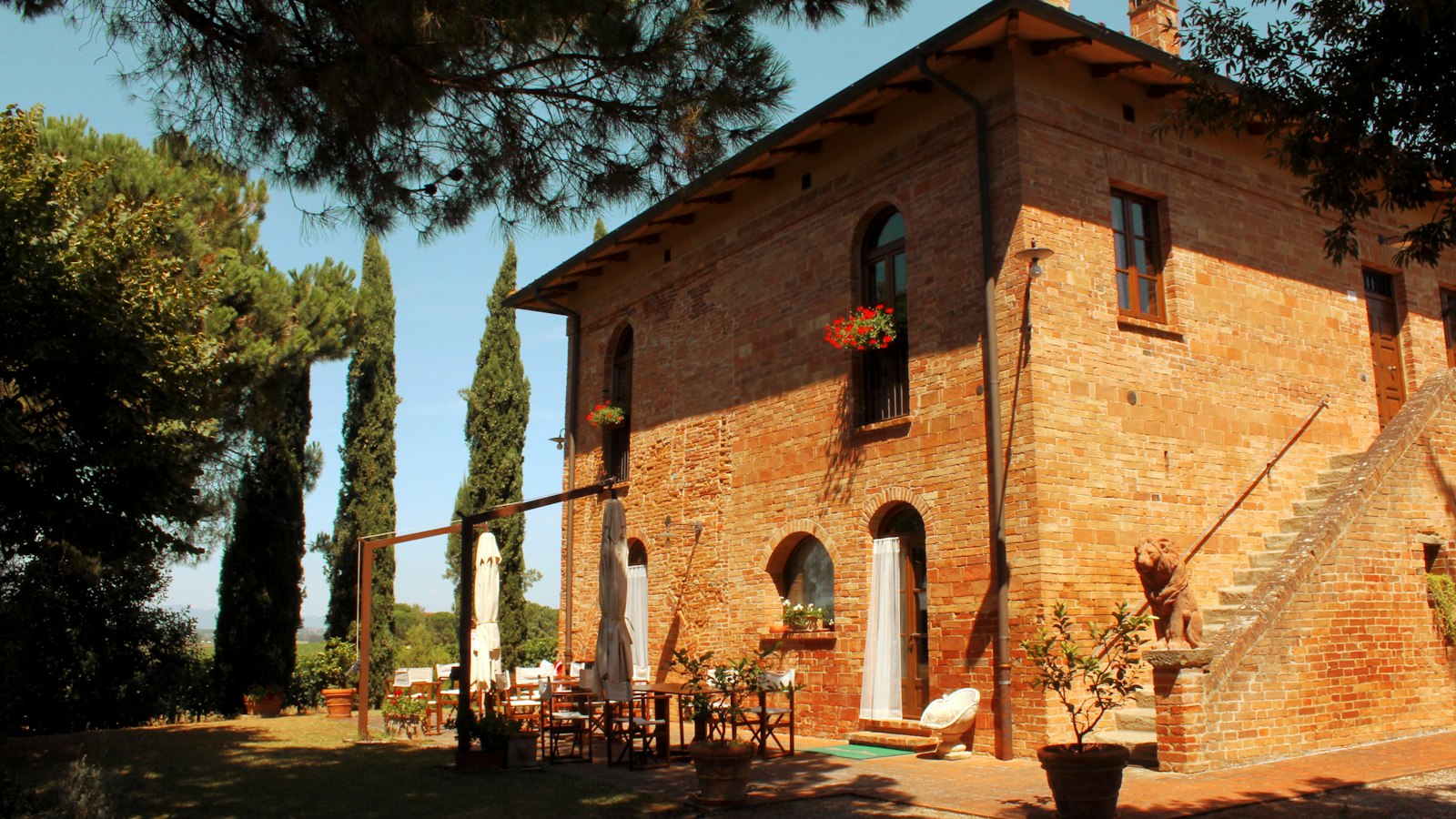
This guide explains buying a house in Italy as a foreigner in 2026, from the reciprocity check and purchase taxes to the deed and ongoing costs.
What changed for property buyers in 2025 and 2026
The core purchase taxes did not change in 2026: the 2026 Budget Law (Law 199/2025) left the 2% and 9% registration tax rates as they were. The changes that matter to foreign buyers are in renovation deductions, the main-home (“prima casa”) rules and some incentives that were not renewed.
| Change | What it means for you | In force from |
|---|---|---|
| Renovation deduction kept at 50% for a main home and 36% for other homes, on up to €96,000 per unit (Law 199/2025) | If you buy a home to renovate, works paid for in 2026 earn a larger deduction than works paid for in 2027 | Expenses incurred to 31 December 2026 |
| Deadline to sell a previously owned home after buying with first-home relief doubled from one year to two years (Law 207/2024, article 1, paragraph 116) | If you already own a home in Italy and buy a new main home, you now have two years to sell the old one without losing the relief | Deeds from 1 January 2025 (and 2024 deeds whose one-year deadline had not expired by 31 December 2024) |
| Under-36 first-home tax exemptions not restored | Do not plan around the old zero-tax regime for young buyers; it lapsed at the end of 2023 and the 2026 Budget Law did not bring it back | Already lapsed |
| Population limit for the 7% pensioner flat-tax municipalities raised from 20,000 to 30,000 inhabitants | More southern towns now qualify if you are a foreign pensioner planning to buy and move your tax residence | 2026 (Law No. 34 of 11 March 2026) |
| Registration tax rules (including first-home relief) move into a new consolidated registration tax law | The conditions are reported as unchanged, but deeds and advice will start citing new legal references | Scheduled; confirm the start date with your notary |
Correcting an outdated assumption: Many English-language guides still describe zero purchase taxes for buyers under 36. That relief applied only to deeds up to 31 December 2023 and has not been reinstated for 2026. If you read otherwise, check the date the article was written.
Renovation rates in 2027: Under the 2025 Budget Law (Law 207/2024), expenses paid in 2027 earn a deduction of 36% for a main home and 30% for other homes, on the same €96,000 cap, unless a later law extends the 2026 rates. Confirm the 2027 position with a tax adviser before you budget a renovation that will run into next year.
Can foreigners buy property in Italy?
Yes. There is no general ban on foreigners owning residential property in Italy, but non-EU buyers who are not legally resident in Italy must pass a “reciprocity” check: your country must allow Italian citizens to buy property there on similar terms. The rule comes from article 16 of the preliminary provisions of the Italian Civil Code.
The notary (notaio), a public official who must handle every Italian property sale, verifies reciprocity before the deed and can ask the Ministry of Foreign Affairs for confirmation. There is no single fixed list of approved countries, because reciprocity can arise from a treaty or from the other country’s own law and can change over time.
| Buyer category | Reciprocity check needed? |
|---|---|
| EU citizens and EEA citizens (Iceland, Liechtenstein, Norway) | No |
| Non-EU nationals legally resident in Italy with a long-term EU residence permit, or a permit for employment, self-employment, business, family or study (and their family members with valid residence) | No |
| Refugees and stateless persons resident in Italy for at least three years | No |
| Non-EU nationals not resident in Italy (for example, most UK, US, Canadian or Australian buyers purchasing from abroad) | Yes: the notary checks before signing |
Do this first: If you need the reciprocity check, ask the notary to confirm it before you sign even the preliminary contract, not just before the final deed. Losing a deposit because of a problem that could have been checked in advance is entirely avoidable.
Two further points that are often misunderstood:
- Buying property does not give you a right to live in Italy. A residence permit is not needed to buy, and owning a home does not create one. Non-EU buyers who intend to live in Italy still need a visa route (see our residency guide).
- There is no surcharge for foreign or non-resident buyers. The tax you pay depends on who the seller is and whether the home becomes your main residence, not on your nationality.
How much does property cost in Italy?
The national average asking price for a home was about €2,217 per square metre in September 2026, according to Immobiliare.it, up 4.9% on a year earlier. Prices vary several times over between the most and least expensive areas.
| Location | Average asking price (€ per m², September 2026) |
|---|---|
| Milan | 5,665 |
| Bolzano | 5,133 |
| Florence | 4,779 |
| Rome | 3,875 |
| Bologna | 3,841 |
| Trentino-Alto Adige (region) | 3,774 |
| Venice (whole comune, including Mestre) | 3,423 |
| Liguria (region) | 2,821 |
| Italy (national average) | 2,217 |
| Molise (region) | 1,048 |
| Calabria (region) | 972 |
These are asking prices, not completed sale prices, and negotiated prices are often lower, so ask local estate agents about recent completed sales. If you are planning a full relocation rather than buying a holiday home, start with our complete guide to moving to Italy.
Main home or second home: the tax difference
The reduced first-home (“prima casa”) rates are tied to where you live or work, not to your citizenship. To qualify, the property must be in the municipality where you already live, or where you move your registered residence within 18 months of the deed, or where you work or carry on an activity (including unpaid activity such as volunteering).
In practice, this means:
- If you are moving to Italy and will register residence in that municipality within 18 months, you can usually claim the 2% registration tax (or 4% VAT on a new build).
- If you are buying a holiday home and will stay resident abroad, you will generally pay the second-home rate of 9% (or 10% VAT).
- Italian citizens living abroad may qualify without moving back if they lived or worked in Italy for at least five years and buy in their municipality of birth or of previous residence or work. Registration on the register of Italians abroad (AIRE) on its own is not enough.
- You must not already own another home bought with first-home relief, unless you sell it within two years of the new purchase (the 2025 change described above).
Warning: If you claim first-home relief and do not move your residence within 18 months, the relief is withdrawn. The tax difference is recovered with interest and a 30% penalty. Only claim it if your move is genuinely planned.
Purchase taxes compared: private seller versus builder
Most foreign buyers purchase resale homes from private individuals, where the main tax is registration tax. If you buy a new home directly from a builder or developer that charges VAT, you pay VAT instead, plus three fixed taxes of €200 each.
| Tax | Private seller, main home | Private seller, second home | Builder (VAT), main home | Builder (VAT), second home |
|---|---|---|---|---|
| Registration tax | 2% (minimum €1,000) | 9% (minimum €1,000) | €200 fixed | €200 fixed |
| VAT | Not applicable | Not applicable | 4% | 10% (22% for luxury categories A/1, A/8, A/9) |
| Mortgage tax | €50 | €50 | €200 | €200 |
| Cadastral tax | €50 | €50 | €200 | €200 |
The “price-value” rule: why you may pay tax on far less than the price
When an individual buys a home from a private seller, registration tax is normally charged on the property’s cadastral value, not the price you pay. The cadastral value is calculated from the official cadastral income (rendita catastale), increased by 5% and then multiplied by a coefficient: 110 for a main home, or 120 for most other homes in cadastral groups A and C.
Worked example: a home with a cadastral income of €800 has a cadastral value of €800 × 1.05 × 120 = €100,800 as a second home. At 9%, registration tax is €9,072, even if the agreed price is €250,000. As a main home, the value is €800 × 1.05 × 110 = €92,400, and 2% tax is €1,848.
You must ask the notary to apply this method, and the deed must still state the real price. Understating the price in the deed removes the benefit and triggers penalties on top of the tax due. The method applies only to residential property and its appurtenances (such as a garage), not to land, shops or offices.
The full cost of buying: fees on top of the price
Budget roughly 10% to 15% above the price for a second home bought from a private seller, and less for a main home; the largest variables are registration tax, the agent’s commission and the notary. Figures below are typical ranges from Italian buying guides published in 2026; they are not fixed tariffs.
| Cost | Typical amount | Who usually pays |
|---|---|---|
| Registration, mortgage and cadastral tax | See the table above | Buyer |
| Notary fee | About €1,500 to €3,500, depending on the value in the deed | Buyer |
| Estate agent commission | About 2% to 4% of the price, plus VAT (often charged to both buyer and seller) | Buyer and seller, each separately |
| Sworn interpreter at the deed | Agreed separately with the interpreter | Buyer |
| Translation and apostille of foreign documents | Varies by document | Buyer |
| Surveyor (geometra) checks | Agreed with the professional | Buyer |
| Mortgage costs (valuation, arrangement, mortgage deed) | Varies by bank | Buyer |
Cash limit: Italy prohibits cash payments of €5,000 or more. The deed records how the price was paid, so plan to pay by bank transfer or banker’s draft. An Italian bank account is not legally required to buy, but it makes paying recurring bills far easier.
The buying process step by step
From accepted offer to final deed usually takes three to six months; a cash purchase with no mortgage can complete in four to six weeks.
| Step | What happens | Typical deposit or deadline |
|---|---|---|
| 1. Get a codice fiscale | Apply at an Agenzia delle Entrate office with your passport, or abroad through an Italian consulate | Needed before the preliminary contract is registered |
| 2. Written offer (proposta d’acquisto) | You make a written, usually irrevocable offer, often through the agent | Deposit of about 1% to 3% of the price; offer typically binding for 7 to 15 days |
| 3. Preliminary contract (compromesso) | Buyer and seller sign a binding contract setting the price, date of deed and conditions | Deposit (caparra) of about 10% to 20% of the price; must be registered within 30 days |
| 4. Mortgage (if needed) | Bank valuation and approval | About 30 to 60 days |
| 5. Final deed (rogito) | Signed before the notary, who collects the taxes and registers the transfer | Balance paid on the day |
| 6. After the deed | Transfer utilities, register for waste tax, move residence if claiming first-home relief | Residence within 18 months for first-home relief |
About the deposit: a confirmatory deposit (caparra confirmatoria) has real consequences. If you withdraw without a valid reason, you lose it; if the seller withdraws, they normally owe you double. Registering the preliminary contract involves a fixed registration duty plus a proportional charge on the deposit, which is largely credited against the final registration tax. Ask the notary for the exact figure.
Language at the deed: notarial deeds are written in Italian. If you do not speak Italian, the deed can be prepared in your language with an Italian version alongside if the notary speaks it, or a sworn interpreter of your choosing must attend. At least one witness must also understand your language.
Cannot be there in person? You can grant a special power of attorney, signed before a notary abroad or at an Italian consulate, with an apostille (or legalisation) and a translation where required.
Checks to make before you sign anything
The most expensive problems for foreign buyers come from defects that were discoverable before the preliminary contract: unregistered extensions, mortgages or charges on the property, and cadastral records that do not match the building. The notary checks legal title before the deed, but by then you may already be committed to a large deposit.
| Check | What it reveals | Who usually does it |
|---|---|---|
| Land registry and mortgage searches (visure ipotecarie) | Mortgages, liens, seizures or other charges | Notary or surveyor |
| Cadastral records (visura and floor plan) | Whether the registered layout and category match the actual property | Surveyor (geometra) |
| Planning compliance (conformità urbanistica) | Whether every room, extension and change was authorised | Surveyor or architect |
| Energy performance certificate (APE) | Energy class; the seller must provide it (fines of €3,000 to €18,000 apply for failing to do so) | Seller |
| Condominium accounts | Unpaid service charges and approved future works | Building administrator |
| Rural property extras | Rights of way, water rights, agricultural pre-emption rights | Surveyor and notary |
Do not rely on the agent alone: an agent is paid when the sale completes. Appoint your own surveyor and, for complex or rural property, an independent lawyer. Our directory lists professionals in Italy who work in English.
Mortgages for foreign buyers
Non-residents can apply for an Italian mortgage, but each bank decides case by case, based on your income and guarantees. Italian buying guides published in 2026 put typical maximum lending at about 80% of the lower of the price or the bank’s valuation, and approval at about 30 to 60 days.
- Expect stricter terms if your income is earned and taxed abroad. Banks will want translated income evidence and may lend a lower percentage.
- The state first-home guarantee fund (Fondo di garanzia prima casa) can guarantee part of a qualifying first-home mortgage, but it is aimed at residents meeting specific income and household criteria, so most foreign second-home buyers will not use it.
- Mortgage interest relief of 19% on interest up to €4,000 a year is available only on a mortgage for your main home, so it is relevant only if you become an Italian taxpayer living in the property.
- Rates are not guaranteed to stay where they are. The European Central Bank raised its key interest rates in June and again in September 2026. Compare fixed and variable offers carefully and confirm the current rate with the lender.
Ongoing costs once you own: IMU, TARI and income tax
If the property is not your main home, you will pay IMU, the municipal property tax; most foreign owners of holiday homes therefore pay it every year. A main home is exempt from IMU unless it is in a luxury category.
| Annual cost | How it works in 2026 |
|---|---|
| IMU (municipal property tax) | Cadastral income × 1.05 × 160 × the municipal rate. Base rate 0.86%; municipalities can lower it or raise it to 1.06%, and some can go up to 1.14% |
| IMU payment dates | First instalment by 16 June 2026, balance by 16 December 2026 (or the full amount by 16 June) |
| TARI (waste collection tax) | Charged by the municipality to the owner or occupier; amounts vary widely by town and property size |
| Income tax on an empty home | For a non-rented property, IMU generally replaces income tax on the property |
| Income tax on rental income | Taxed in Italy, at ordinary income tax rates or the optional 21% flat rate (cedolare secca) on free-market residential leases |
Example: a second home with cadastral income of €500 in a town applying 1.06% pays about €890 in IMU a year (€500 × 1.05 × 160 × 1.06%). Check your municipality’s resolution for the exact rate.
If you plan to let the property, read our renting guide: the 2026 Budget Law changed the tax treatment of short-term lets for owners with more than two flats.
Renovation tax deductions in 2026 and 2027
For renovation spending incurred during 2026, the deduction is 50% on a main home and 36% on other homes, on up to €96,000 per property, recovered over ten equal annual instalments against Italian income tax.
| Year expenses are paid | Main home | Other homes | Spending cap per unit |
|---|---|---|---|
| 2026 | 50% | 36% | €96,000 |
| 2027 | 36% (unless extended) | 30% (unless extended) | €96,000 |
Important for non-residents: a deduction only has value if you have Italian taxable income to offset. A non-resident holiday-home owner with no Italian income may receive little or no benefit. Check this with a tax adviser before treating a deduction as part of your budget.
Selling later: the five-year capital gains rule
If you sell an Italian property within five years of buying it, any gain is taxable in Italy, unless the property was your (or your family’s) main home for most of the time you owned it. You can choose to pay a 26% substitute tax on the gain through the notary at the sale, or declare it at ordinary income tax rates (23%, 33% or 43% in 2026, depending on your income). After five years, the gain on a residential property is generally not taxed in Italy, although your home country may tax it.
Common mistakes foreign buyers make
- Signing an offer or preliminary contract before checks are done. Both are binding. Make the offer conditional on a satisfactory survey and, if needed, mortgage approval.
- Assuming the agent represents you. In Italy agents commonly charge both parties. Instruct your own surveyor.
- Claiming first-home relief without a firm plan to move. The 30% penalty plus interest can turn a saving into a cost.
- Ignoring planning irregularities. Unauthorised extensions are common in older and rural homes, and they can block a sale or a mortgage.
- Paying anything in cash. Payments of €5,000 or more in cash are prohibited.
- Budgeting with outdated rules. Under-36 exemptions have ended, and renovation deduction rates are scheduled to fall after 2026.
Frequently asked questions
