
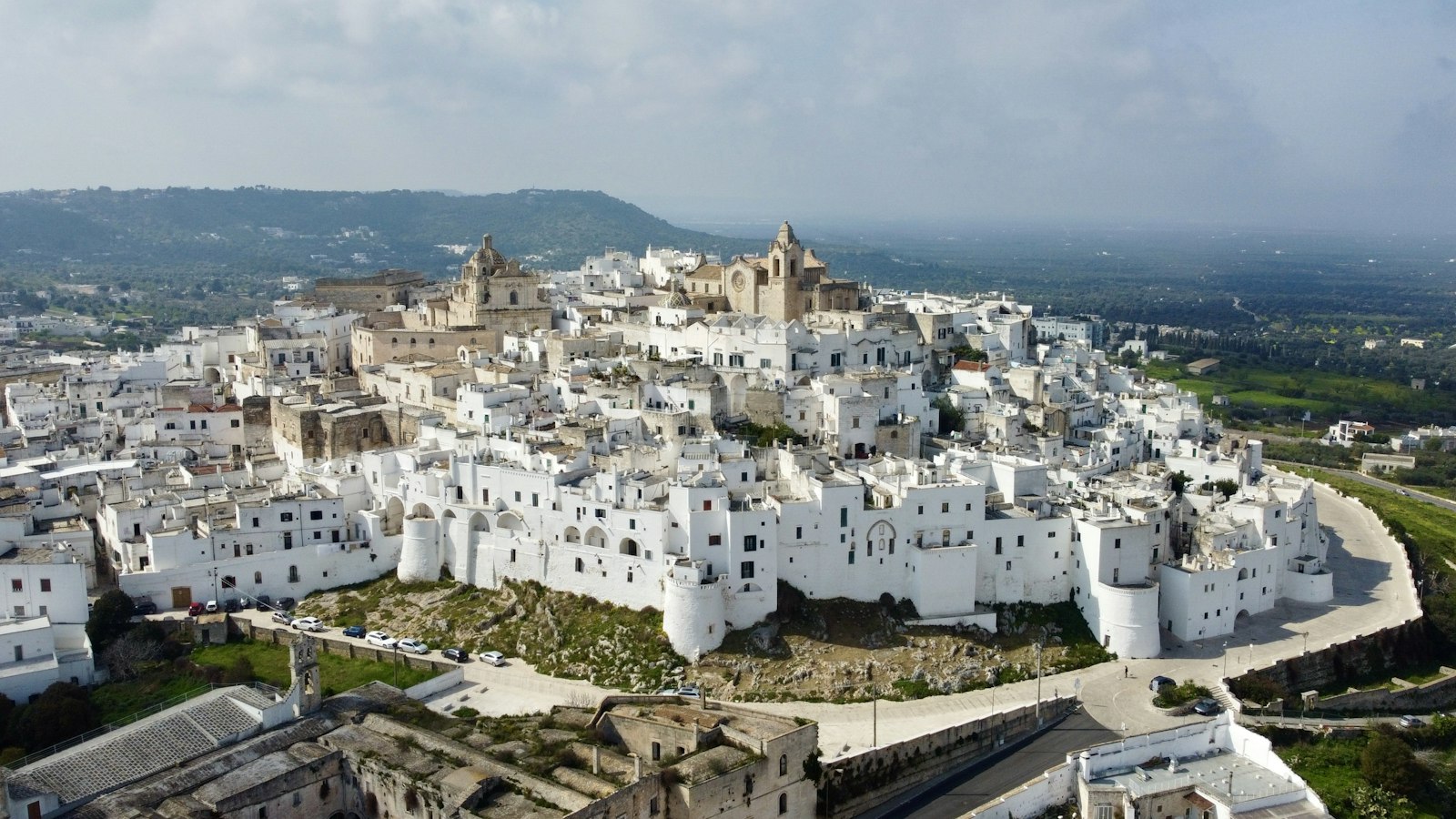
This guide compares the best places to live in Italy for expats in 2026, with rents, jobs, healthcare and airports for each city and region.
What changed in 2025 and 2026
Three recent changes alter the “where should I live?” calculation: the 7% pensioner regime now covers more and larger southern towns, the flat tax for wealthy new residents has risen to €300,000, and asking rents have kept rising in most large cities.
| Change | What it means for choosing where to live | Effective |
|---|---|---|
| 7% pensioner regime town cap raised from 20,000 to 30,000 inhabitants (Law No. 34 of 11 March 2026, Article 26) | Larger and better-served southern towns, such as Ostuni, Noto and Sulmona, now qualify | 2026 (Law No. 34 of 11 March 2026) |
| New-resident flat tax raised from €200,000 to €300,000 a year | Affects high-net-worth arrivals, wherever in Italy they settle | People moving tax residence from 2026 |
| Asking rents rose in the year to September 2026 in most large cities, including Genoa (+9.4%), Naples (+5.4%) and Rome (+5.2%) | The cheaper northern cities are getting less cheap | Immobiliare.it, September 2026 |
| Middle income-tax rate cut from 35% to 33% | A modest gain (capped at about €440 a year) for people on Italian salaries; regional surcharges still vary by place | 2026 tax year |
Correcting an outdated assumption: Many English-language “retire to Italy” articles still say the 7% regime is limited to towns of under 20,000 people. That changed in 2026. Equally, some older articles imply that any southern town qualifies; it does not. The town must be in one of eight named southern regions (or certain earthquake-affected areas of central Italy) and under the population cap.
Our taxes for expats living in Italy guide covers all three tax regimes in full. If you are still at the planning stage, our complete guide to moving to Italy sets out the full process.
How we compared Italian cities
We compared ten cities on six measures that matter to people relocating: rent, the local job market, the size of the international community, regional healthcare quality, airport access and climate.
We used official or widely recognised data wherever it exists, and we say where it does not:
| Measure | What we used | Limitation |
|---|---|---|
| Rent | Immobiliare.it average asking rents for each comune, September 2026 (see also our cost of living guide) | Asking rents, not agreed rents; central neighbourhoods cost more |
| Jobs | Istat unemployment rates by macro-area (second quarter of 2025): North 3.9%, Centre 5.2%, South 12.1% | Istat publishes city detail separately; we use the area rate as a guide |
| International community | Share of foreign residents in each city (comune), 1 January 2025, from the Città metropolitana di Milano statistics office | Counts all foreign nationals, not only English-speaking professionals |
| Healthcare | GIMBE analysis of the Ministry of Health’s 2023 essential levels of care (LEA) scores, out of 300 | Measures the region’s public system as a whole, not individual hospitals |
| Quality of life | Il Sole 24 Ore Qualità della vita 2025 ranking of 107 provinces (published 1 December 2025) | The 2026 edition is due in December 2026 |
| Airport access | 2025 passenger totals from Assaeroporti releases | We did not find verified 2025 totals for Venice, Bari or Cagliari |
| Climate | General description only | Microclimates vary sharply between coast, plain and mountain |
A note on “international community”: Foreign-resident percentages include everyone without Italian citizenship, most of whom are not English-speaking professionals. A high share signals a city used to newcomers and with more international services; it does not guarantee an English-speaking social scene.
The comparison table: 10 cities at a glance
Milan and Bologna score best on jobs and services, Florence and Rome cost almost as much as Milan, and the South offers rents at roughly half the northern level in exchange for weaker job markets and public healthcare.
| City (region) | Rent, €/m²/month | 70 m² flat, approx. per month | Jobs (area unemployment, Q2 2025) | Foreign residents (city) | Regional LEA health score (2023, /300) | Quality of life rank 2025 (/107) | Main airport, 2025 passengers | Climate |
|---|---|---|---|---|---|---|---|---|
| Milan (Lombardy) | 22.3 | €1,560 | North: 3.9% | 19.6% | 257 | 8th | Malpensa 31.2m, plus Bergamo 16.9m and Linate | Cold, foggy winters; hot, humid summers |
| Florence (Tuscany) | 21.8 | €1,520 | Centre: 5.2% | 15.6% | 286 | 36th | Florence about 3.8m, Pisa nearly 6.0m | Hot inland summers; cool, damp winters |
| Venice (Veneto) | 15.5 | €1,085 | North: 3.9% | 16.0% | 288 (highest) | not confirmed | Marco Polo (2025 total not verified) | Humid; winter flooding risk |
| Rome (Lazio) | 19.1 | €1,340 | Centre: 5.2% | 12.9% | 216 | 46th | Fiumicino about 50.9m | Long, hot summers; mild winters |
| Bologna (Emilia-Romagna) | 16.5 | €1,155 | North: 3.9% | 15.1% | 278 | 4th | Bologna 11.1m | Hot summers; cold, foggy winters |
| Naples (Campania) | 15.3 | €1,075 | South: 12.1% | 6.6% | 206 | 104th | Naples 13.3m | Mediterranean; hot summers, mild winters |
| Turin (Piedmont) | 13.0 | €910 | North: 3.9% | 15.7% | 270 | 57th | Turin 5.0m | Alpine-influenced; cold winters |
| Bari (Puglia) | 13.0 | €910 | South: 12.1% | 4.8% | 228 | 67th | Bari (2025 total not verified) | Mediterranean; hot, dry summers |
| Genoa (Liguria) | 11.2 | €780 | North: 3.9% | 12.0% | 219 | 43rd | Genoa 1.6m | Mild coastal winters for the North |
| Palermo (Sicily) | 9.7 | €680 | South: 12.1% | 4.1% | 173 | 97th | Palermo about 9.2m | Hot, long summers; mild winters |
Rent source: Immobiliare.it, September 2026, for the whole comune (Venice includes Mestre and the mainland). 70 m² figures are rounded and based on average asking rents. Health scores are regional, so Milan’s score is Lombardy’s, Bari’s is Puglia’s, and so on.
The two rent portals do not agree exactly. Idealista and Immobiliare.it publish different figures for the same city because they measure different listings in different ways, and city-wide averages hide large gaps between central and outer neighbourhoods. Treat every rent here as a range of roughly ±10% and check live listings for the neighbourhood you want.
Missing from the table, but worth knowing: the top two provinces in Il Sole 24 Ore’s 2025 ranking were Trento and Bolzano, with Udine third. These Alpine and north-eastern areas score highly on services and safety, but they are smaller job markets, colder, and less used to English speakers. We have not included them in the rent comparison because they are smaller provincial markets; Bolzano’s average asking rent was about €14.9/m² in September 2026 (Immobiliare.it).
Milan: best for careers, at a price
Milan is the best place in Italy to build a career or run an international business, but it is also the most expensive city to rent in.
- Rent: €22.3/m², so roughly €1,115 for a 50 m² one-bedroom flat and €1,560 for 70 m².
- Jobs: the North’s unemployment rate was 3.9% in the second quarter of 2025. Milan is Italy’s centre for finance, fashion, design, consulting and technology, and has the largest pool of roles for English speakers.
- International community: 19.6% of the city’s residents are foreign nationals, the highest share of any major Italian city.
- Healthcare: Lombardy scored 257/300 in the 2023 LEA monitoring, a pass but 14 points lower than in 2022.
- Airports: Milan has three airports; Malpensa (31.2 million passengers in 2025) and Bergamo (16.9 million) together handled more than 48 million, before counting Linate.
The honest downside: salaries in Milan are higher than elsewhere in Italy but rarely high enough to offset the rent gap for people on local pay. Winters are grey, air quality on the Po plain is poor by European standards, and competition for good flats near international schools is intense. See jobs for English speakers in Italy and international schools in Italy.
Rome: capital-city scale, uneven services
Rome offers the widest range of embassies, international organisations and English-language schools outside Milan, but its public services and quality-of-life score are middling.
- Rent: €19.1/m², around €1,340 for 70 m².
- Jobs: the Centre’s unemployment rate was 5.2%. Work for foreigners clusters around international agencies (including the United Nations food agencies), diplomacy, tourism, education and the public sector.
- International community: 12.9% of residents are foreign nationals.
- Healthcare: Lazio scored 216/300 in 2023, 10 points lower than in 2022, placing it in the lower half of compliant regions.
- Quality of life: 46th of 107 provinces in 2025.
- Airports: Fiumicino, Italy’s busiest airport at about 50.9 million passengers in 2025, plus Ciampino for low-cost flights.
The honest downside: public transport, waste collection and bureaucracy are frequent complaints, and commuting across the city can be slow. Rome rewards people who choose their neighbourhood carefully around work and school.
Bologna: the best all-rounder
Bologna combines a top-five quality-of-life ranking, one of Italy’s best regional health services and rents roughly a quarter below Milan’s, which makes it the strongest all-round choice for many families.
- Rent: €16.5/m², about €1,155 for 70 m².
- Jobs: Emilia-Romagna sits within the North’s low-unemployment area; the regional economy is built on advanced manufacturing (including the automotive and packaging machinery sectors), logistics and the university.
- International community: 15.1% of residents are foreign nationals, and the city has a large student population.
- Healthcare: Emilia-Romagna scored 278/300 in 2023, among the top three regions.
- Quality of life: 4th of 107 provinces in 2025, up from 9th.
- Airport: Bologna handled 11.1 million passengers in 2025, with good European connections and fast trains to Milan, Florence and Rome.
The honest downside: the rental market is tight because of student demand, so expect competition and short-let pressure. Summers are hot and humid and winters can be foggy. Read our renting in Italy guide before you start viewing.
Florence: beauty and tourism pressure
Florence has one of Italy’s best regional health services and a long-established English-speaking community, but its rents are now close to Milan’s while local salaries are not.
- Rent: €21.8/m², about €1,520 for 70 m², second only to Milan among major cities.
- Jobs: the Centre’s unemployment rate was 5.2%. Work leans towards tourism, education (including many foreign university programmes), fashion and luxury goods.
- International community: 15.6% of residents are foreign nationals.
- Healthcare: Tuscany scored 286/300 in 2023, second only to the Veneto.
- Quality of life: 36th of 107 provinces.
- Airports: Florence (about 3.8 million passengers in 2025) is small; many residents fly from Pisa (nearly 6.0 million) or Bologna.
The honest downside: short-term holiday lets have squeezed the long-term rental supply in the historic centre, and summer crowds and heat are heavy. Many expats who work remotely choose towns elsewhere in Tuscany for more space at lower rents, though a car then becomes close to essential.
Turin: the North’s value option
Turin offers northern salaries, services and Alpine access at rents around 40% below Milan’s, although that gap is narrowing.
- Rent: €13.0/m², up 4.5% in the year to September 2026; about €910 for 70 m².
- Jobs: the North’s unemployment rate of 3.9% applies; the economy centres on automotive, aerospace, engineering and a growing technology sector.
- International community: 15.7% of residents are foreign nationals.
- Healthcare: Piedmont scored 270/300 in 2023.
- Quality of life: 57th of 107.
- Airport: Turin handled 5.0 million passengers in 2025, so many long-haul trips route via Milan.
The honest downside: winters are cold, the English-speaking expat scene is smaller than Milan’s, and the rental market is rising quickly.
Venice and the Veneto: strong healthcare, a city under strain
The Veneto region has Italy’s highest-scoring public health system, but the historic city of Venice itself is expensive, tourist-heavy and practically difficult; most expats who choose the region live on the mainland or in nearby cities.
- Rent: the comune of Venice, including Mestre and the mainland, averages €15.5/m², about €1,085 for 70 m²; the historic centre costs considerably more.
- Jobs: the North-East has a strong manufacturing and export economy and low unemployment.
- International community: 16.0% of residents in the comune of Venice are foreign nationals.
- Healthcare: the Veneto scored 288/300 in 2023, the highest of any region.
- Airport: Marco Polo is the regional hub, with Treviso for low-cost flights. We did not find a verified 2025 passenger total.
The honest downside: living in the historic centre means paying a premium for flats that are often small, damp and difficult to reach with shopping or furniture, with periodic high-water flooding. Padova, Treviso and Verona are the usual alternatives.
Genoa and the Ligurian coast: cheaper rent, older population
Genoa has the lowest rents of any major northern city and a mild coastal climate, but a smaller job market and weaker transport links than Milan or Turin.
- Rent: €11.2/m², about €780 for 70 m², although rents rose 9.4% in the year to September 2026.
- Jobs: port, shipping, engineering and healthcare; the North’s 3.9% unemployment rate applies, but the city’s labour market is far smaller than Milan’s.
- International community: 12.0% of residents are foreign nationals.
- Healthcare: Liguria scored 219/300 in 2023 and was one of two regions demoted from compliant status compared with 2022.
- Quality of life: 43rd of 107.
- Airport: Genoa handled only 1.6 million passengers in 2025, so many residents travel to Milan or Nice for wider connections.
The honest downside: the coastal Riviera towns are beautiful but expensive in season and quiet out of it, and Liguria’s healthcare score has slipped.
Naples: big-city South
Naples offers big-city culture and a busy airport at rents about a third below Milan’s, but it ranks near the bottom for quality of life and has a much weaker job market.
- Rent: €15.3/m², about €1,075 for 70 m²; well above the rest of the South because of tourist demand.
- Jobs: the South’s unemployment rate was 12.1% in the second quarter of 2025, more than three times the North’s.
- International community: 6.6% of residents are foreign nationals.
- Healthcare: Campania scored 206/300 in 2023, a pass but in the lower half.
- Quality of life: 104th of 107 provinces.
- Airport: Naples Capodichino handled 13.3 million passengers in 2025, the fourth busiest in Italy.
The honest downside: bureaucracy, traffic and public services are harder work than in the North. Naples suits people with remote income who value culture and energy over order. Note that the city itself is far too large for the 7% pensioner regime, but some towns around the Bay of Naples and the Sorrento Peninsula are not (see below).
Bari and Puglia: the South’s most liveable coast
Puglia combines low rents, good-value property, a long coastline and the South’s best regional healthcare score, which is why it has become the most popular southern region for foreign retirees and remote workers.
- Rent: Bari averages €13.0/m², about €910 for 70 m²; smaller towns are considerably cheaper.
- Jobs: the South’s 12.1% unemployment rate applies; local opportunities for English speakers are limited outside tourism and teaching.
- International community: only 4.8% of Bari’s residents are foreign nationals, but towns in the Valle d’Itria have established British and German communities. One specialist source puts Ostuni’s foreign residents at about 5% of its population.
- Healthcare: Puglia scored 228/300 in 2023, the highest in the South and a compliant region.
- Quality of life: Bari ranked 67th of 107.
- Airports: Bari and Brindisi both have international airports. We did not find verified 2025 passenger totals for them.
The honest downside: summers are very hot, a car is close to essential outside Bari, and the rural property market includes many older buildings that need significant work. Read how to buy property in Italy as a foreigner before committing.
Palermo and Sicily: lowest rents, toughest services
Palermo has the lowest rents of any major Italian city, but Sicily also has one of the lowest regional healthcare scores and a weak job market.
- Rent: €9.7/m², about €680 for 70 m²; some Sicilian provincial capitals are cheaper still (Caltanissetta at about €4.5/m²).
- Jobs: the South’s 12.1% unemployment rate applies.
- International community: 4.1% of residents are foreign nationals, the lowest share among the cities in our table.
- Healthcare: Sicily scored 173/300 in 2023, second lowest of all regions and non-compliant in two of the three areas measured.
- Quality of life: Palermo ranked 97th and Catania 96th.
- Airports: Palermo handled about 9.2 million passengers and Catania 12.4 million in 2025.
The honest downside: if you have significant health needs, factor in waiting times and the likelihood of using private care. Sicily works best for people with a foreign income, a tolerance for bureaucracy, and either private health cover or good Italian. See healthcare in Italy for expats.
The 7% pensioner towns: what the 2026 change means
If you receive a foreign pension, have not been Italian tax resident for the previous five tax years, and move to a qualifying town in the South, all of your foreign-source income can be taxed at a flat 7% for the year you opt in and the following nine years.
| Rule | Detail |
|---|---|
| Eligible regions | Sicily, Calabria, Sardinia, Campania, Basilicata, Abruzzo, Molise and Puglia, plus specified earthquake-affected areas of central Italy |
| Population cap | 30,000 inhabitants (raised from 20,000 by Law No. 34 of 11 March 2026) |
| Who qualifies | People receiving a pension paid from abroad, moving from a country with a tax co-operation agreement with Italy |
| Prior non-residence | Not Italian tax resident in the five tax years before opting in |
| Income covered | All foreign-source income, including pensions, dividends, interest, foreign rent and capital gains |
| Duration | The year of the option plus nine further tax years (often described as 10 years in total); it cannot be extended |
Towns that the new cap brought into scope include, according to a specialist tax adviser’s analysis using Istat population data:
| Town (region) | Population cited | Why expats look at it |
|---|---|---|
| Ostuni (Puglia) | 29,943 | Established British and German community; the “white city” of the Valle d’Itria |
| Manduria (Puglia) | 29,665 | Lower prices than Ostuni; wine country near the Ionian coast |
| San Giovanni Rotondo (Puglia) | 26,249 | Hospital town on the Gargano |
| Noto (Sicily) | 24,612 | Baroque town in south-east Sicily |
| Pompeii (Campania) | 23,647 | Near Naples airport and the Bay of Naples |
| Sulmona (Abruzzo) | 21,759 | Mountain town; popular with people tracing Italian ancestry |
| Vico Equense (Campania) | 20,198 | Sorrento Peninsula, at relatively accessible prices for the area |
Smaller favourites such as Alberobello (about 10,100) and Tropea (about 5,700) already qualified under the old cap. For the wider pros and cons beyond tax, see is Italy a good place to live.
Check before you buy: several of these towns sit only just under 30,000. The same adviser states that the relevant figure is Istat’s resident population on 1 January of the year before you transfer, but the commentary we reviewed does not all agree on which population figure applies, and the treatment of the central earthquake zones under the new cap still awaits official clarification. A town that qualifies today could cross the threshold later, so confirm eligibility with an Italian tax professional for the specific year of your move.
UK government pensions are different. Under the UK–Italy double tax treaty, UK government service pensions (for example civil service and armed forces pensions) are generally taxed only in the UK, which affects how much the 7% regime is worth to you. See our taxes for expats guide.
The honest trade-off: every eligible region except Puglia and Campania was rated non-compliant or near the bottom of the 2023 health rankings, and the South’s public services and transport are thinner than the North’s. A 7% tax rate does not help if you are three hours from a major hospital without a car. Pick towns near a regional hospital and an airport, and budget for private health cover: non-working non-EU residents must also pay at least €2,000 a year to join the national health service voluntarily. Our how to get residency in Italy guide explains the elective residence visa most non-EU retirees use.
Which place suits you? A quick matcher
Match the city to your income source first: local salary points to the North, foreign income opens up the South, and a foreign pension makes the 7% towns worth a serious look.
| Your situation | Strongest options | Why | Read next |
|---|---|---|---|
| Career move or job hunting | Milan, Bologna, Turin | Lowest unemployment (North 3.9%) and most English-speaking roles | Working in Italy as an expat |
| Family with school-age children | Milan, Rome, Bologna, Florence | Widest choice of international schools and strong health services in Emilia-Romagna and Tuscany | International schools in Italy |
| Remote worker on a foreign salary | Bologna, Turin, Bari, Naples, Palermo | Lower rents, good airports | Italy digital nomad visa |
| Retiree with a foreign pension | Puglia, Abruzzo, Sicily, Sardinia (qualifying towns) | 7% flat tax and low property prices | How to get residency in Italy |
| Priority on public healthcare | Veneto, Tuscany, Emilia-Romagna, Trento | Top 2023 LEA scores (278 to 288 out of 300) | Healthcare in Italy for expats |
| Starting a business | Milan, Bologna, Turin | Largest markets and professional networks | Start a business in Italy |
Once you have a shortlist, visit outside the summer season, ideally in January, before signing a lease. Our moving to Italy from the UK checklist and how much it costs to move to Italy help with the next steps. You can then find English-speaking professionals in each area through our Italy directory.
Frequently asked questions
