
This guide describes what it is like to live in the Netherlands as an expat in 2026, from housing and paperwork to weather, work culture and cycling.
What has changed for expats in 2026
Several rule changes in 2026 and 2027 directly affect what daily life costs and how attractive a Dutch job offer is, and much of the “living in the Netherlands” content online predates them. The table below summarises the changes that matter most; each is covered in depth in the linked guide.
| Change | Status | What it means day to day | Read more |
|---|---|---|---|
| 30% expat ruling reduced to a maximum of 27% from 1 January 2027 | Legislated | Lower net pay for most people who qualified from 2024 onwards | Taxes for expats |
| Mid-rent regulation extended to homes scoring up to 186 points, with a 2026 maximum of €1,228.07 a month | In force | Some homes advertised above this may be overpriced; check before signing | Renting guide |
| Longer job-search period under the revised EU Single Permit Directive (22 May 2026) | In force | Work-based permit holders who lose their job after holding the permit for two years or more can have up to six months to find a new employer | Residency guide |
| Health insurance premiums and deductible (eigen risico) for 2027 | To be confirmed | The deductible is €385 in 2026; insurers publish 2027 premiums in November, so compare policies before the year-end switching deadline | Health insurance guide |
| Highly skilled migrant salary thresholds indexed to €5,942 (aged 30 and over) and €4,357 (under 30) a month | In force | Sets the floor for many sponsored job offers | Highly skilled migrant visa |
Correction to outdated content: If you have read that the 30% ruling will step down to 20% and then 10% over five years, that plan was dropped. It was replaced by a flat reduction to 27% from 2027, with people who first qualified before 2024 keeping 30% for the rest of their ruling period. The taxes guide has the full transition table.
The short version: pros and cons at a glance
The Netherlands suits people who value safety, organisation, cycling and an English-friendly workplace, and who can absorb high rents. It frustrates people who need cheap housing, sunshine or a quick social life.
| Aspect | The upside | The downside |
|---|---|---|
| Language | First in the world for non-native English proficiency (EF EPI 2025) | Social circles and many official letters remain in Dutch |
| Housing | Strong tenant protections, rent caps up to 186 points | Shortage of about 384,000 homes; fierce competition in the Randstad |
| Cost | Groceries moderate by Western European standards | Rents, insurance and eating out are expensive, especially in Amsterdam |
| Getting around | More than a quarter of all journeys are made by bike; dense rail network | Train fares rise most years, and peak-time travel is expensive without a discount subscription |
| Work culture | Flat hierarchies, protected evenings, high part-time working | Direct feedback can feel blunt; decisions are made by consensus and can be slow |
| Weather | Mild winters, rarely extreme | Roughly 1,774 hours of sunshine a year on average, plenty of wind and drizzle |
| Bureaucracy | Highly digital once you have a BSN and DigiD | The first few weeks involve a strict sequence of registrations |
| Healthcare | Universal coverage through compulsory insurance | GP gatekeeping and a €385 annual deductible surprise many newcomers |
The rest of this guide explains each row, and links to the detailed guide for each topic. If you are still at the “should I move at all?” stage, our companion guide Is the Netherlands a Good Place to Live? weighs the decision, and the pillar How to Move to the Netherlands: Complete Expat Guide covers the logistics.
Housing: the biggest frustration for most newcomers
Finding a home is the single hardest part of living in the Netherlands for most expats. The Ministry of Housing estimates the statistical shortage at about 384,000 homes in 2026, or 4.6% of the housing stock. That is a slight improvement on 4.9% in 2024 and 4.8% in 2025, and the government expects a gradual decline, but a balanced market is not forecast until the mid-2030s even at 100,000 new homes a year.
What that feels like on the ground:
- Viewings are competitive. In Amsterdam, Utrecht, The Hague and Haarlem, popular flats attract many applicants, and landlords choose quickly.
- Income tests are strict. Most private landlords want a gross monthly income of around three times the rent. At 2026 average new-tenancy rents of roughly €1,880 to €1,915 a month, that means earning well over €5,500 a month gross.
- Rent rules are on your side, if you use them. Since 1 July 2024, most new contracts are indefinite by default; since 1 July 2023, deposits have been capped at two months’ basic rent; and homes scoring up to 186 points under the points system (woningwaarderingsstelsel) have a legal maximum rent.
- Social housing is not a realistic short-term option. Housing association waiting lists in the big cities can run for many years.
Callout: average rents move every quarter. Pararius rental reports put the average rent for new free-sector tenants at €1,882 a month (second quarter of 2026) and €1,914 (third quarter of 2026). Rents move every quarter, so treat any single figure as a snapshot.
Do not do this: Do not pay a deposit or “key money” before you have seen the property and a written contract. Rental scams targeting newcomers are common, and key money is not permitted.
Go deeper: Renting in the Netherlands: Complete Expat Guide · How to Find an English-Speaking Estate Agent in the Netherlands · Best Places to Live in the Netherlands · Directory: Housing and Real Estate
Cost of living: what daily life really costs
Daily life in the Netherlands is expensive mainly because of rent; groceries are moderate, while health insurance, transport and eating out add up quickly. A single professional in a Randstad city should expect rent to take the largest share of take-home pay by some distance. One-off costs such as shipping your belongings come on top; see best international moving companies for the Netherlands.
| Cost item | Typical 2026 figure | Notes |
|---|---|---|
| New free-sector rent (national average) | about €1,880 to €1,915 a month | Amsterdam is markedly higher per square metre |
| Basic health insurance | roughly €155 to €160 a month per adult | Compulsory; children under 18 are covered free |
| Annual health deductible (eigen risico) | €385 | Applies to most care beyond GP visits |
| Utilities for a family flat | varies widely | Depends on the size and insulation of the home and your energy contract |
| Statutory minimum wage (aged 21 and over) | €14.99 an hour (from 1 July 2026) | Indexed twice a year |
Health insurers publish their premiums for the following year in November, and you can switch insurer for the new year, so it is worth comparing policies every autumn.
Pay can soften the blow. Qualifying recruits from abroad can receive part of their salary tax-free under the expat ruling, but the maximum falls from 30% to 27% from 2027, which is worth factoring into any salary negotiation now.
Go deeper: Cost of Living in the Netherlands for Expats · How Much Does It Cost to Move to the Netherlands? · Taxes for Expats Living in the Netherlands
Weather: grey, mild, wet and windy
The Dutch climate is mild and rarely extreme, but it is often grey, damp and windy, and that matters more to daily life than the temperatures suggest. Using the climate normals that KNMI (the Royal Netherlands Meteorological Institute) currently applies, the country averages about 795 mm of precipitation and 1,774 hours of sunshine a year, with an average annual temperature of around 10.5°C.
| Feature | What to expect |
|---|---|
| Rain | Frequent light rain and drizzle rather than tropical downpours; showers can arrive and pass within minutes |
| Wind | The flat, coastal landscape means strong headwinds, which you will notice on a bike |
| Winter | Usually above freezing during the day, but short, dark days from November to February |
| Summer | Pleasant and long-light, with occasional heatwaves; many homes have no air conditioning |
Callout on the figures: The rainfall and sunshine figures above are the long-term normals KNMI quotes in its annual climate overview; individual stations and years vary, and recent years have been sunnier than the normal. Check the KNMI website for station-level normals.
In practice, expats adapt with good waterproofs, a weather app with a rain radar (the Dutch check it before cycling), and a deliberate plan for winter: daylight lamps, indoor sport and short trips south. Many newcomers say the darkness of the first winter is harder than the cold.
Dutch directness and social life
Dutch communication is direct by design: people say what they think, give unvarnished feedback and expect the same from you. It is not meant as rudeness. In a Dutch workplace, a colleague who says your plan “will not work” is usually trying to help, and a polite but vague answer can be read as evasive.
What newcomers commonly notice:
- Plans are planned. Social life runs on diaries. Spontaneous “pop round tonight” invitations are rare; dinner with friends may be booked weeks ahead.
- Friendships take time. Many Dutch adults have long-established circles from school, university or their home town. Expats often build their first friendships with other internationals, through sport clubs (verenigingen), volunteering or language classes.
- Money is discussed openly. Splitting the bill is normal, and asking what something cost is not considered impolite.
- Birthdays are a ritual. Expect circle parties at home, where you congratulate not only the person whose birthday it is but also their relatives.
Callout: directness has limits. Being direct is not the same as being loud or confrontational. Dutch colleagues value calm, factual disagreement and consensus (the “polder model”). Shouting or pulling rank tends to backfire.
Go deeper: Working in the Netherlands as an Expat · Directory: Lifestyle & Community
Cycling culture and getting around
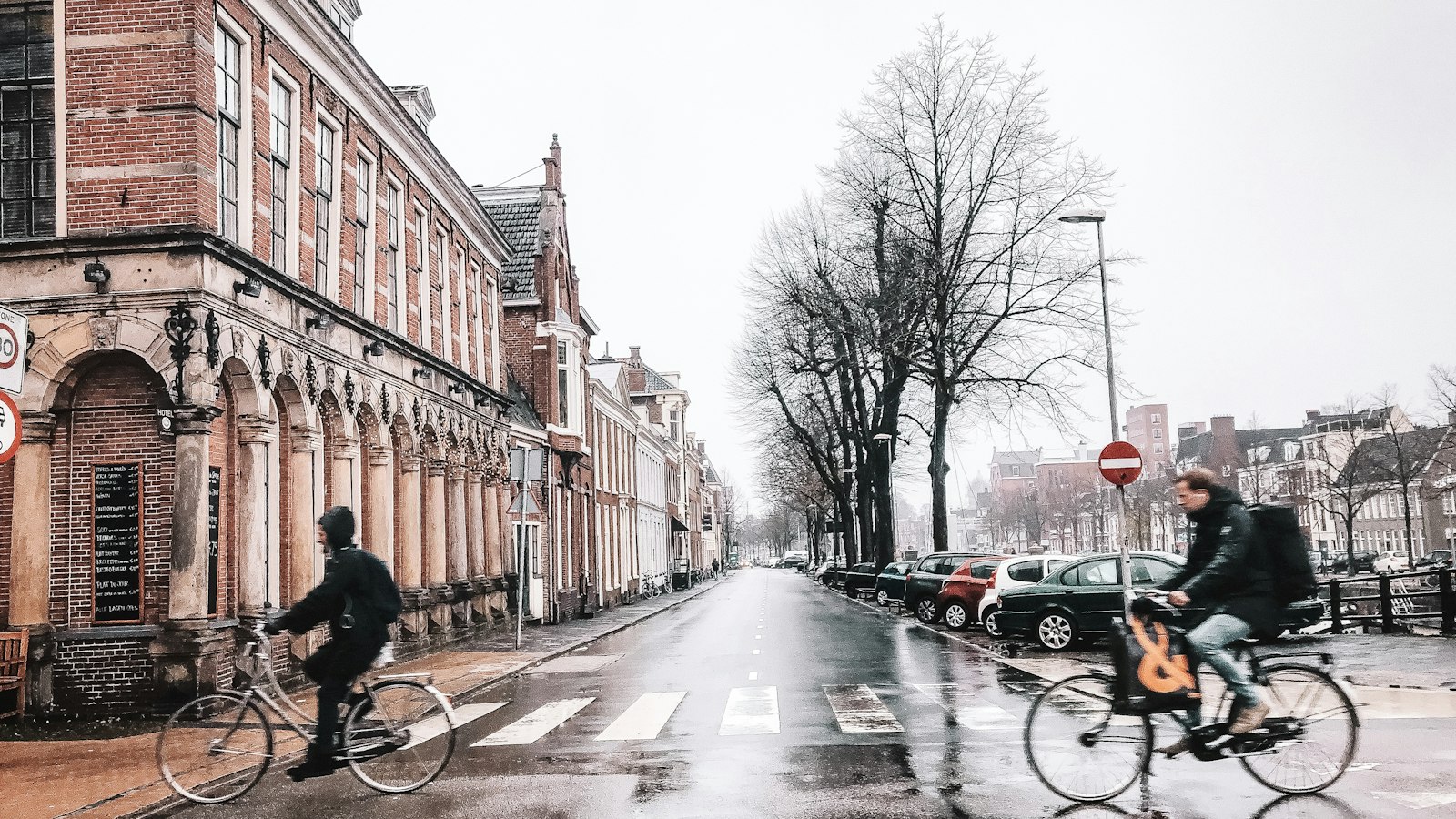
The bicycle is the default way to get around most Dutch towns: more than a quarter of all journeys in the Netherlands are made by bike, according to the government’s Netherlands Institute for Transport Policy Analysis (KiM). There are more bicycles than residents, and e-bikes now make up a large share of new bikes sold.
| Mode | How it works for expats |
|---|---|
| Bicycle | Separate cycle paths, bike parking at stations, and cycling to work in office clothes is normal. Bike theft is common, so use two locks |
| Train | Frequent intercity services link the major cities; off-peak discount subscriptions can cut the cost considerably |
| Local transport | Trams, metros and buses in the big cities; pay by contactless bank card or an OV-chipkaart |
| Car | Expensive to run and park in city centres; useful in rural areas and for families |
Do not do this: Do not walk in red cycle lanes, and do not underestimate cyclists’ right of way. Most newcomers’ first close call is stepping onto a bike path without looking.
If you plan to drive, licence rules depend on where your licence was issued. UK licence holders, for example, can drive on their UK licence for a limited period after becoming resident, then need to exchange it.
Go deeper: Driving in the Netherlands as a Foreigner · How to Exchange a UK Driving Licence in the Netherlands · Directory: Transport & Utilities
Bureaucracy: BSN, DigiD and the paperwork trail
Dutch bureaucracy is highly digital and generally reliable, but everything depends on getting your registrations done in the right order. The key is your citizen service number (BSN), which you receive when you register at your municipality in the Personal Records Database (BRP). If you will stay for more than four months, you must register within five days of arrival, at an address that permits registration.
Once you have a BSN, you can apply for DigiD, the government login used for taxes, benefits and many health services. Without a BSN, opening a bank account, getting paid normally and arranging health insurance all become harder.
| Step | Why it matters | Guide |
|---|---|---|
| Residence permit (if not an EU/EEA/Swiss citizen) | Your legal right to live and work | How to Get Residency in the Netherlands |
| Municipal registration (BRP) and BSN | Unlocks almost everything else | How to Move to the Netherlands |
| Dutch bank account | Rent, salary and direct debits | How to Open a Bank Account |
| Basic health insurance | Compulsory, usually within four months | How to Register for Healthcare |
| GP registration | Your route into the health system | Healthcare guide |
Immigration timescales vary by permit. The Immigration and Naturalisation Service (IND) sets different legal decision periods for different applications, commonly 60 or 90 days for temporary permits, and it can extend them. Highly skilled migrant applications made through a recognised sponsor are often decided much faster in practice, but the IND does not guarantee a shorter period, so confirm current timescales on the IND website.
Callout: official documents may need translating. Birth and marriage certificates from outside the Netherlands often need an apostille or legalisation and a sworn translation before a municipality will accept them. See Certified Translation Services in the Netherlands.
British readers should note that free movement no longer applies to UK nationals arriving after Brexit; the Moving to the Netherlands from the UK checklist covers the permit and paperwork sequence step by step.
Go deeper: Directory: Immigration · Visa Lawyers · How to Find an Immigration Lawyer in the Netherlands
Work culture and work-life balance
Dutch working life is known for flat hierarchies, protected evenings and a high rate of part-time work. Eurostat figures consistently show the Netherlands with the highest share of part-time workers in the EU, far above the EU average.
What that means for expats:
- Meetings are expected to start and end on time, and juniors are encouraged to challenge seniors.
- Working late is not seen as a badge of honour; leaving at 17:30 to collect children is normal.
- Many international employers work in English, especially in tech, logistics, finance and research around Amsterdam, Eindhoven, Rotterdam and The Hague.
- Self-employment is common, but the self-employed deduction was cut sharply in 2026, and contractor status is being scrutinised more closely.
Go deeper: Working in the Netherlands as an Expat · Jobs for English Speakers in the Netherlands · How to Start a Business in the Netherlands as a Foreigner · Directory: Employment and Accountants
Healthcare: how it feels in practice
Healthcare in the Netherlands is good and universal, but it feels different from what many expats are used to: you must buy compulsory private basic insurance, and your GP (huisarts) decides whether you see a specialist. Basic insurance must usually be taken out within four months of arrival, and the annual deductible of €385 in 2026 applies to most care beyond GP visits.
Newcomers often report two frustrations: GPs who advise rest and paracetamol before prescribing, and waiting lists for some specialist and mental health care. Others value the absence of large surprise bills and the strong primary care network. Finding a GP who is accepting new patients can take some effort in busy cities, so start as soon as you have an address.
Callout: international policies. If you are not covered by Dutch social insurance (for example, some posted workers or retirees), different rules apply. Check your position with the healthcare guides below before choosing a policy.
Go deeper: Healthcare in the Netherlands for Expats · Health Insurance for Expats in the Netherlands · How to Register for Healthcare in the Netherlands · Directory: Healthcare and Insurance
Language: can you get by in English?
Yes, at work and in daily errands you can usually get by in English: the Netherlands ranked first of 123 countries in the 2025 EF English Proficiency Index, in the “very high” band. Shop staff, doctors and colleagues in international firms will switch to English readily, often before you have finished your first Dutch sentence.
The catch is that English only takes you so far. Letters from the municipality, the tax office and some landlords arrive in Dutch, many local clubs and school meetings run in Dutch, and long-term integration and some permanent residence or naturalisation routes involve Dutch language requirements. Expats who learn even basic Dutch usually report a noticeably richer social life.
Family life and schools
The Netherlands is widely regarded as a good place to raise children: cycling independence starts early, outdoor play is normal, and childcare is subsidised for working parents, although full-price childcare is expensive. Families choose between free Dutch state schools (with many children becoming fluent quickly, especially when young), subsidised Dutch international schools, and private international schools with higher fees.
Childcare allowance (kinderopvangtoeslag) reimburses a share of costs up to a maximum hourly rate, so check the rate your provider charges against the cap.
Go deeper: International Schools in the Netherlands · Cost of Living in the Netherlands for Expats · Directory: Education
Who tends to thrive, and who struggles
Expats who arrive with a job, a realistic housing budget and a willingness to plan tend to thrive; those relying on cheap housing, a quick social circle or plenty of sunshine tend to struggle.
| You will probably enjoy it if you | You may struggle if you |
|---|---|
| Earn enough to clear the three-times-rent income test | Need to rent cheaply in Amsterdam or Utrecht |
| Like cycling, structure and punctual plans | Prefer spontaneous social life |
| Value direct, honest feedback | Find blunt criticism hard to separate from personal dislike |
| Are happy to start learning Dutch | Expect to live entirely in English long term |
| Can tolerate grey winters | Rely on sunshine for your mood |
If housing is the deciding factor, looking beyond the Randstad (for example Eindhoven, Groningen or smaller commuter towns) often changes the picture; our planned Best Places to Live in the Netherlands guide compares the options.
Frequently asked questions
