On this page · 11 sections
Quick answer
Living in Greece as an expat usually means a warm, sociable, outdoor life alongside slow, paper-heavy administration that runs mostly in Greek. In your first months you will collect a tax number (AFM) and a social insurance number (AMKA), and non-EU arrivals must register their address in person with the Hellenic Police within 90 days. English goes a long way in Athens and tourist areas, much less so in government offices and rural villages. Island life is beautiful but seasonal and dependent on ferries; the mainland offers more services all year. Summers in 2026 brought heat near 43°C and serious wildfires, so daily routines shift around the heat.
This guide describes everyday life for expats in Greece in 2026, from the first paperwork to language, social life and the seasons.
What changed in 2025 and 2026
For daily life, the most noticeable recent changes are stricter registration at the Schengen border, a new immigration law that changes how residence permits are processed and renewed, a freeze on new holiday lets in central Athens, longer permitted working days and sharply higher prices for utilities and transport.
| Change | Date in force | What it means for you |
|---|---|---|
| New labour law (Law 5239/2025) | Published October 2025 | A fast-track hiring route lets employers offer short contracts through the ERGANI II system, which you accept in the MyErgani app before you start. With your explicit consent, one employer can ask for days of up to 13 hours on up to 37.5 days a year. |
| New immigration law (Law 5275/2026) | Published on 6 February 2026 | Permit applications are now allocated to the immigration directorate with the lowest workload, wherever you live. A renewal can be filed up to three months after the permit expires, with a penalty of €100 for each month of delay. |
| Digital nomads must apply from abroad | February 2026 | You can no longer arrive as a visitor and apply for a digital nomad permit inside Greece; a national (D) visa from a consulate comes first. |
| EU Entry/Exit System (EES) fully operational | 10 April 2026 | Non-EU visitors are registered with fingerprints and a facial image at the border. British residents covered by the Withdrawal Agreement must show their residence document when entering or leaving. |
| Minimum wage raised to €920 a month (gross) | 1 April 2026 | The pay floor rose from €880, with linked benefits such as the unemployment benefit also increasing. |
| Freeze on new short-term rental registrations in central Athens | In force through at least the end of 2026 | Fewer flats are being converted to holiday lets in Athens districts 1, 2 and 3; the government has said similar restrictions are being rolled out in Thessaloniki, Santorini, Chania, Paros and Halkidiki. |
| Inflation reaches 5.0% | September 2026 (ELSTAT) | Housing utilities rose 14.7% and transport 11.3% on a year earlier, so bills and travel cost noticeably more. |
ETIAS is not yet in force. Visa-exempt visitors to Greece, including British visitors, will eventually need an ETIAS travel authorisation costing €20. As of October 2026, the launch has been postponed with no new start date set, it is expected no earlier than 2027, and nothing is payable. Ignore websites that ask you to pay for one now.
Greece in 2026: the everyday snapshot
Most expats describe Greek daily life as relaxed, social and outdoors, with family and friendships at the centre, set against a public administration that can be slow, inconsistent and dependent on knowing the right office. The experience changes a great deal with where you live and whether you earn locally.
| Aspect of daily life | What to expect |
|---|---|
| Rhythm of the day | Late lunches and late dinners; in summer, activity shifts to mornings and evenings to avoid the heat |
| Social life | Built around cafés, tavernas, the beach, family and neighbourhood; invitations often come quickly |
| Administration | Many services are online through gov.gr, but some steps still require an appointment or visit in person |
| Language | Greek for anything official; English widely spoken in Athens, Thessaloniki and tourist areas |
| Prices | Lower than the UK for most things, but rising: restaurants and hotels were 6.9% dearer in September 2026 than a year earlier |
| Climate | Long, mild springs and autumns; very hot summers; snow in the mountains and the north in winter |
| Safety | Low everyday crime; pickpocketing on the Athens metro and in crowded tourist spots |
If you are still deciding whether the move makes sense at all, the evidence-led verdict on whether Greece is a good place to live weighs safety, cost, healthcare and climate data. This guide focuses on what the move feels like once you are there.
Bureaucracy: numbers, offices and your residence permit
Your first months in Greece revolve around three things: getting a tax number (AFM), getting a social insurance number (AMKA) and securing your residence document. Almost everything else, from a rental contract to a doctor’s appointment, depends on them.
The GOV.UK guidance on living in Greece, updated on 17 March 2026, sets out the essentials for British nationals.
| Step | What it is | Why you need it |
|---|---|---|
| Tax Identification Number (AFM) | Your Greek tax number | Rental contracts, utility accounts, a bank account and your annual tax return |
| Social insurance number (AMKA) | Obtained from a citizens service centre (KEP) | Public healthcare, employment and most benefits |
| EOPYY registration | Registration with the national health services organisation, after you have an AMKA | Access to state healthcare on the same basis as Greek citizens |
| Address registration and residence permit (non-EU arrivals) | Register in person with the Hellenic Police within 90 days of arrival and apply for a temporary residence permit | Legal residence after your national (D) visa |
| Withdrawal Agreement residence document (Britons resident before 2021) | The biometric card, known as Engrafo Diamonis 18(4) | Proves your rights; must be shown at the border under the EES |
| Annual tax return and declaration of assets | Filed every year once you have an AFM, including assets held abroad | GOV.UK warns that failure to declare carries severe penalties |
Greece has digitised a great deal of its administration through the gov.gr portal, and many certificates and applications can now be handled online. The experience is still uneven: some offices require hard-to-get appointments, documents from abroad often need official translation, and answers can vary between offices. The 2026 immigration law should help with one long-standing problem: residence permit applications are now sent to whichever directorate has the lowest workload, rather than always to the office nearest your home.
Warning: Do not miss a renewal date. Under Law 5275/2026, a residence permit renewal can be filed up to three months after expiry, but a penalty of €100 applies for each month of delay. Put renewal dates in your calendar several months ahead, and keep copies of every receipt.
For British residents who arrived before 2021, GOV.UK notes that permanent residence is available after five years on a temporary permit and that a refused application can be appealed within 20 days. If your case is not routine, for example a family member joining you or a change of permit type, specialist visa lawyers in Greece can save months, and the guide on how to get residency in Greece explains each permit category.
Language: how far English will get you
English will get you through daily life in Athens, Thessaloniki and the main tourist areas, but not through the tax office, the police station or a village council. Learning Greek, even at a basic level, changes the experience more than any other single step.
Greek uses its own alphabet, and speaking the language takes far longer than learning to read it. Younger Greeks in cities often speak excellent English, and in tourist areas almost everyone in hospitality does. The picture changes quickly in government offices, hospitals outside the big cities, and rural communities, where older residents may speak little or no English.
| Situation | How much English helps |
|---|---|
| Cafés, shops and restaurants in cities and tourist areas | Usually enough |
| Renting through an agent | Often enough; the contract itself will be in Greek |
| Tax office, police and municipal services | Limited; bring a Greek speaker or a professional |
| Public hospitals and health centres | Varies; doctors often speak English, administrative staff less so |
| Village life and neighbours | Greek makes a large difference to how quickly you are accepted |
| Official websites and emergency information | Many gov.gr services are in Greek; the government’s earthquake assembly-point map, mysafetyplan.gov.gr, is in Greek |
Tip: Learn the alphabet before you arrive. Being able to read street signs, bus destinations, shop names and the headings on official forms removes a surprising amount of daily stress. Most expats who settle well also take a structured Greek course in their first year and use it every day, even when the other person switches to English.
When you need documents translated for a permit, a licence exchange or a property purchase, use a professional rather than a friend. The guide to certified translation services in Greece explains when a translation must be certified and how to choose a provider.
Pace of life, social life and the Greek calendar
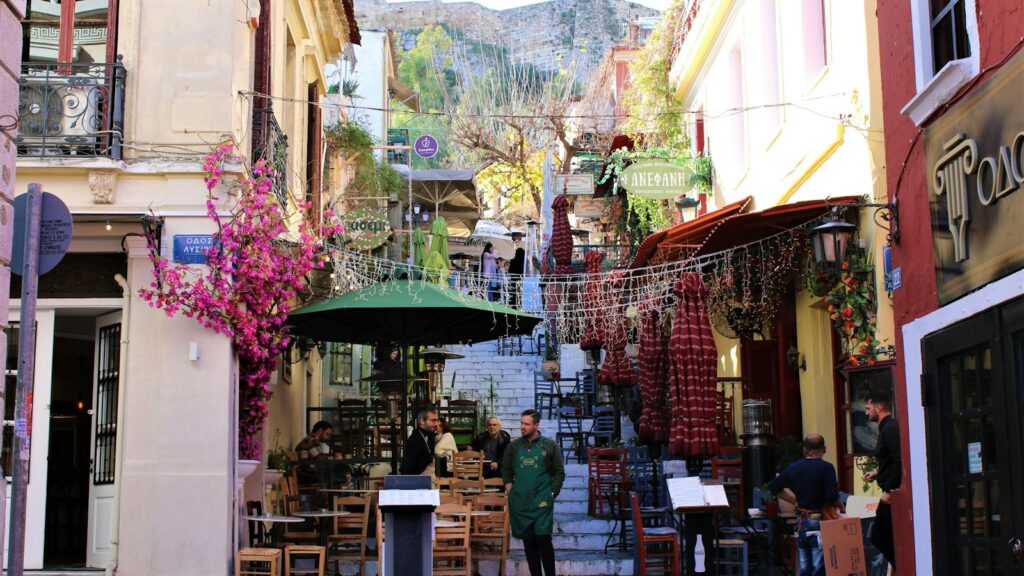
Greek social life is generous and spontaneous, built around food, family and long evenings outdoors. Expats who join in, accept invitations and learn a little Greek usually find it easier to make friends here than in Northern Europe.
Daily life has a slower, more flexible rhythm than in the UK, and plans are often made on the day. The flip side: appointments may start late, tradespeople may not arrive when promised, and replies to emails can be slow.
The Greek calendar shapes the year. Easter is the most important festival, often celebrated with family in home villages, and August is the main holiday month, when many businesses close or slow down and city residents head for the islands and the coast. Name days, which mark the saint a person is named after, are celebrated like birthdays. There are also regular public demonstrations; the FCDO notes that they take place on dates including 1 May, 17 November and 6 December, and advises avoiding large gatherings.
| Where to meet people | What it suits |
|---|---|
| Expat associations and international clubs | Newcomers who want practical tips and an instant network |
| Language exchanges and Greek classes | Meeting Greeks and other foreigners at the same time |
| Sports clubs, sailing, hiking and running groups | Active people; the outdoor climate makes these popular all year |
| Volunteering, including with local environmental and animal welfare groups | Building long-term ties in a smaller community |
| Parents’ networks at schools | Families with children |
Life in a village or on a small island is more closely knit than in a city, and neighbours will notice and welcome a newcomer quickly. The quickest route into a new community is usually a local club, class or association; you can browse lifestyle and community groups in Greece to find one near you.
Meet people who have already made the move
Compare expat clubs, social groups and community organisations across Greece in the ExpatListing directory
Islands against mainland: two different lives
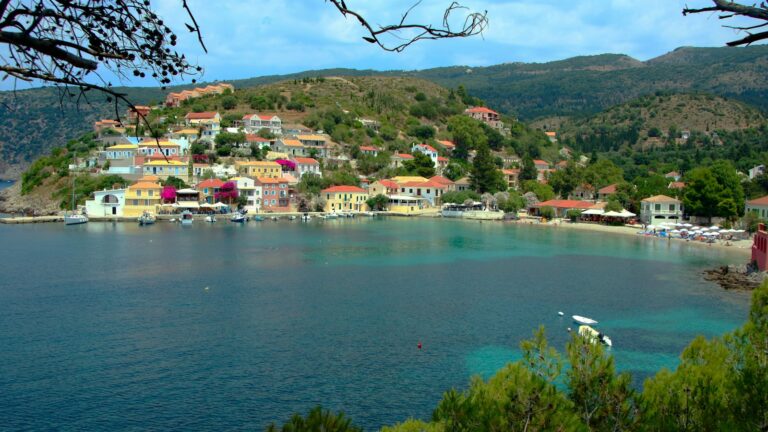
Island life offers extraordinary beauty and a close community, but it is seasonal, more expensive for many goods, and dependent on ferries and flights. The mainland, especially around Athens and Thessaloniki, offers jobs, hospitals, schools and services all year round.
| Factor | Popular islands | Smaller islands | Athens and Thessaloniki | Mainland towns and villages |
|---|---|---|---|---|
| Year-round life | Busy in summer; quieter in winter, with some businesses closed | Very quiet out of season | Full city life all year | Steady, local life |
| Housing pressure | High in places such as Santorini, Chania and Paros, where short-term rental restrictions are being introduced | Lower, but little to rent long-term | High in central Athens; new holiday-let registrations frozen in central districts | Lower |
| Healthcare | Hospitals on larger islands; serious cases may be transferred | Health centre only; transfers for serious cases | Wide choice of public and private hospitals | Varies by region |
| Getting around | Ferries and flights; winter timetables are reduced and weather can cancel sailings | Fully dependent on ferries | Metro, buses, airport | A car is usually essential |
| Work | Mostly tourism and seasonal | Very limited | Most professional jobs | Agriculture, local services, remote work |
| Wildfire exposure in 2026 | Fires on Crete, Paros and Cephalonia | Varies | Major fire about 70 km north-west of Athens | Significant in forested areas |
The most common mistake is to choose a place after a summer holiday. An island that is lively in August can be very quiet in February, with many tavernas closed, fewer flights and ferries that may not sail in bad weather. The guide to the best places to live in Greece compares regions, cities and islands for different budgets and lifestyles.
Ask about winter before you commit. Before you settle on an island, find out which shops, pharmacies, schools and doctors stay open all year, how many ferries run in January, and how quickly a serious medical case would reach a hospital. Local expat groups are often the best source of honest answers.
Housing and settling in
Finding a long-term home is now one of the harder parts of moving to Greece, especially in central Athens and on the best-known islands, where short-term holiday letting has reduced the supply of long-term rentals.
According to reports by the state broadcaster ERT, cited by Greek City Times in January 2026, housing costs in the most affected areas have risen by as much as 20% in recent years. The government has frozen new short-term rental registrations in central Athens through at least the end of 2026 and is introducing similar restrictions elsewhere, which should gradually return some homes to the long-term market.
| Settling-in task | Practical point |
|---|---|
| Finding a rental | Expect to need an AFM before you sign; agents can help non-Greek speakers |
| Utilities | Electricity, water and internet accounts are set up in your name using your AFM; housing utility prices were 14.7% higher in September 2026 than a year earlier |
| Bank account | Usually needed for rent and bills; requirements vary by bank |
| Healthcare | Register with EOPYY once you have an AMKA, or arrange private insurance |
| Schools | Education is compulsory from age 4 (two years of kindergarten) to 15 |
| Driving licence | A UK licence can be used for up to six months; after six months’ residence it should be exchanged |
When you view a home, think about heat as well as location. Ask about air conditioning, insulation and shutters, and whether the building has been modernised. The guide to renting in Greece explains contracts, deposits and your rights as a tenant, and the guide on how to open a bank account in Greece covers the documents banks ask for. To compare agents and landlords who work with newcomers, browse housing providers in Greece.
Find a long-term home before you arrive
Compare rental agents and housing providers who work with international tenants in the ExpatListing directory
Getting around: roads, ferries and driving
In Athens you can live without a car, using the metro and buses; almost everywhere else, a car or scooter makes daily life much easier. On the islands, ferries and flights are your link to the rest of the country.
Driving in Greece takes adjustment. The FCDO describes traffic as busy, fast and chaotic, especially in the larger cities, and notes that local drivers regularly ignore speed limits and do not always stop at pedestrian crossings. Helmets are compulsory on mopeds and quad bikes, and UK provisional licences are not valid in Greece.
| Driving rule (FCDO and GOV.UK) | Detail |
|---|---|
| Using a UK licence as a resident | Allowed for up to six months |
| After six months’ residence | Exchange your UK licence for a Greek one; you cannot renew a UK licence while living in Greece |
| Drink-driving | A reading above two-thirds of England’s legal limit can bring a fine and possible imprisonment |
| Mopeds and quad bikes | Drivers and passengers must wear helmets |
| Provisional licences | Not valid for driving or hiring any vehicle |
The guide to driving in Greece as a foreigner covers road rules, insurance and buying a car, and the guide on how to exchange a UK driving licence in Greece walks through the application.
Summer, safety and the practical side of daily life
Everyday life in Greece is safe, but summer now shapes routines: people work, shop and exercise early or late, homes are kept shuttered in the afternoon, and residents follow wildfire alerts closely.
In July 2026, the national meteorological service forecast inland temperatures approaching 43°C, and the Ministry of Labour restricted outdoor work during the hottest hours in the worst-affected areas. In late July and early August, wildfires burned more than 12,000 hectares in a single week, according to an AFP report, including a major fire near Porto Germeno, about 70 km north-west of Athens.
Set your phone to receive emergency alerts, which the FCDO notes are sent through the 112 system according to your phone’s location, never light fires or barbecues outdoors in the fire season, and find your earthquake assembly point on mysafetyplan.gov.gr.
Crime is a smaller day-to-day concern. The FCDO’s main warnings concern thefts on the Athens metro and in crowded tourist places, and drink spiking in nightlife areas.
Healthcare is part of daily practicality too. Residents registered with EOPYY pay, according to GOV.UK, around 25% of the cost of most prescriptions, while state hospital treatment is free with a referral. Many expats also keep private insurance for faster appointments. The guide to healthcare in Greece for expats explains how the public system works and how to register.
Who tends to thrive in Greece, and who struggles
The people who settle best in Greece usually bring their income with them, choose their location after seeing it out of season, learn some Greek, and treat paperwork as a project rather than a source of daily frustration.
| Tends to thrive | Tends to struggle |
|---|---|
| Retirees and remote workers with income from abroad | People who need a well-paid local job quickly |
| People who enjoy a social, outdoor, family-centred culture | People who prefer privacy, punctuality and fixed schedules |
| Those who learn Greek and accept invitations | Those who rely only on English and expat circles |
| Residents who test a place in winter before committing | Buyers and renters who decide after one summer holiday |
| People who plan for heat, fire and ferry timetables | People with health conditions made worse by extreme heat |
| Patient people who keep copies of everything | Anyone who expects administration to work in English, quickly |
For the full sequence of steps, from choosing a visa to arranging your first home, start with the guide on how to move to Greece. Readers who will look for a job should also read the guide to working in Greece as an expat. Everything else, from relocation companies to English-speaking doctors, is on the Greece directory hub.

Author: Chris
Frequently asked questions
Is it easy to make friends in Greece as an expat?
For most people, yes, provided they make an effort. Greek social life is built around cafés, tavernas, family and the neighbourhood, and invitations often come quickly. Expat clubs, language exchanges, sports groups and school parents’ networks help newcomers settle. Learning some Greek makes the biggest difference, especially in villages and on smaller islands where fewer people speak English.
Do I need to speak Greek to live in Greece?
You can manage daily life in Athens, Thessaloniki and tourist areas with English, but almost all official business is in Greek, including tax, police and many gov.gr services. Rental contracts are usually in Greek too. Many expats use a Greek-speaking adviser, lawyer or friend for their first appointments, and take a structured Greek course during their first year.
Is living on a Greek island a good idea?
It can be, if you choose with your eyes open. Islands are beautiful and close-knit, but many are quiet in winter, with fewer ferries and flights, some businesses closed and limited healthcare on smaller islands. Popular islands such as Santorini, Chania and Paros also face housing pressure. Spend time there in winter before you sign a long lease or buy.
What paperwork do I need when I first arrive in Greece?
Most newcomers need a tax number (AFM), a social insurance number (AMKA) from a citizens service centre and, for public healthcare, registration with EOPYY. Non-EU arrivals with a national visa must register their address in person with the Hellenic Police within 90 days and apply for a residence permit. British residents from before 2021 should carry their Withdrawal Agreement residence document.
About this guide
Last updated October 2026. We fact-check our guides against official sources every month and change this date when something changes. Rules, fees and thresholds can change at short notice, so confirm with the official source or a qualified adviser before you act. This is general information, not legal or tax advice.